Hey everyone,
I’m [let’s just call me Sam, since that’s what my co-workers and clients know me as]—been in the industrial and commercial ESS (Energy Storage Systems) game for 7 years now, and I can tell you, the last 5 years have been a wild ride for energy policy. Back when I started, policies were loose, mostly just “do your best” for peak shaving, but now? It’s nonstop—new incentives for renewables integration, stricter carbon targets, sudden demand response mandates that pop up out of nowhere. So how the hell do we (as ESS suppliers) adapt to all this change, and more importantly, how can you, as an industrial or commercial facility manager, make sure your ESS isn’t just a box you bolt to the wall, but a tool that actually works with whatever rules your local government throws at you? Industrial and Commercial ESS
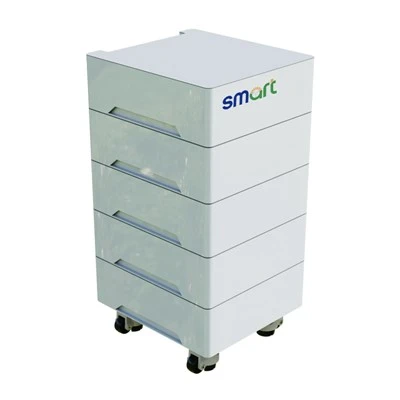
Let’s start with the basics: what even is an industrial and commercial ESS these days? It’s not just big batteries (though lithium-ion is still our bread and butter); it’s software that talks to your solar panels, your grid, your building’s HVAC, even your on-site generators. And policy doesn’t just affect how we build these systems—it affects every part of them: what incentives you qualify for, how you get paid for grid services, what emissions rules you have to follow if your ESS is charging from fossil fuels, and even how you dispose of the batteries in 10 years.
First off, we had to ditch the one-size-fits-all model. A few years back, we sold the exact same 500 kWh ESS to a manufacturing plant in Ohio, a grocery chain in Texas, and a warehouse in California. That worked when policies were generic, but not anymore. Now, let’s take a quick example: California’s Title 24 rules mandate commercial buildings have on-site energy storage if they’re over a certain size, plus they get a 30% tax credit for ESS that charges from renewables. Meanwhile, Texas doesn’t have statewide ESS mandates, but their grid operator (ERCOT) pays top dollar for ESS that can respond to grid outages in under 10 minutes. Ohio? They just rolled out a new “demand response revenue guarantee” for ESS that’s used during peak grid stress. If I still sold the same system to all three, the California grocery would hate that our ESS doesn’t integrate with their rooftop solar’s tax credit requirements, the Texas warehouse would lose out on ERCOT money because our response time is too slow, and the Ohio plant would miss out on that revenue guarantee because our software isn’t set up for their specific demand response program. So we split our product lines: we have a “CA-Compliant” ESS with built-in solar-integration APIs, a “Texas Grid-Ready” model with sub-10-minute response, and an “Ohio PeakSavings” model tuned for their demand response rules. That sounds basic, but it’s shifted our sales by 40% in the last two years because we stopped forcing clients to adapt to our products, and started adapting our products to their policy landscapes.
Next up: we had to become policy detectives. Back in 2021, a lot of ESS suppliers were just reading press releases, but now we have a full-time policy team (it’s just two of us, but we’re plugged into every state’s utility commission meetings, the EPA, and even local chamber of commerce energy committees) that tracks not just current rules, but pending ones. Last year, New York announced they were going to require all commercial ESS projects over 1 MWh to include battery recycling clauses. We didn’t wait for the rule to finalize—we started retrofitting all our pending NY orders with integrated recycling tracking software, so when the rule passed, our clients were already compliant, and they got a discount for not waiting. A competitor down the street got stuck redoing 20+ ESS systems a month after the rule dropped, and lost three big clients because of it. The key here is: policy changes aren’t one-and-done. They’re iterative. Last month, the EPA proposed new rules for ESS charging emissions, and our policy team is already working with our engineers to adjust the ESS’s charging algorithms so we’ll meet the rule before it’s even official. That’s not over-preparing—that’s how you avoid getting left in the dust.
But here’s the thing: adapting to policy isn’t just about making our products fit rules—it’s about helping clients navigate the rules they don’t even understand. A lot of facility managers don’t have time to deep-dive into every utility incentive or state tax break. They just want their ESS to save them money, keep their lights on, and check the “compliance” box. So now, we include a free policy audit with every ESS sale. Last quarter, a manufacturing plant in Illinois was thinking about a 200 kWh ESS for peak shaving, but our audit found they qualified for a 40% state tax credit for ESS that helps integrate with their wind farm power purchase agreement (PPA). We adjusted their ESS’s software to prioritize charging from the wind farm instead of the grid, so not only did they get the tax credit, but they also saved $12k a year on their energy bills. That’s not just selling an ESS—that’s turning policy changes into a revenue stream for our clients, which makes us more than a supplier, we’re a partner.
Wait, but what about the sudden, unplanned policy changes? Like, in 2022, Europe’s Energy Crisis led to a bunch of countries rolling out emergency demand response mandates that required commercial facilities to cut their grid usage by 20% within an hour. We had clients in Germany and France who were stuck with ESS that could only discharge 10% of their capacity per hour. So we quickly rolled out an over-the-air software update that unlocked the full discharge capacity, and even added a feature that let our clients sell the extra capacity to the grid during the emergency. We didn’t have to replace any hardware—just adjust the software, which cost us almost nothing, but saved our clients hundreds of thousands in penalty fees. That’s the kind of agility you need: ESS software can be updated remotely, which means we don’t have to ship new hardware every time a policy changes. We just push a patch, and boom—compliant again. That’s a game-changer compared to, say, old diesel generators, which you have to physically modify every time rules change.
But let’s talk about the challenges, because this isn’t all rainbows and tax credits. One big one is inconsistent policies across states and countries. A client with facilities in 5 states might have 5 different ESS requirements: California wants solar integration, Texas wants fast response, Ohio wants demand response, New York wants recycling, and Florida doesn’t have major ESS mandates but has strict hurricane backup rules. We can build a system that does all that, but it adds complexity to the product, and sometimes makes the price go up. Another challenge is policy volatility—last year, the US Congress proposed changing the solar tax credit, which had a ripple effect on ESS sales, because clients were waiting to see if the credit would go up or down. We had to adjust our sales projections on the fly, and even offered a “policy lock” for clients who signed a contract before the tax credit change, guaranteeing they’d get the same credit even if the law changed. That helped us retain 90% of our clients during that uncertainty.
Also, we can’t forget about long-term adaptation. Energy policy isn’t just about the next year—it’s about 10, 15 years down the line, when carbon targets require 100% renewable energy, or when grid storage becomes mandatory for all commercial buildings. So we design our ESS to be modular. If in 5 years, a new policy requires your ESS to add a certain service, you don’t have to buy a whole new system—you just add a battery module and update the software. That means our clients don’t have to worry about their ESS becoming obsolete when policies change. It’s like a smartphone, not a flip phone: you can add apps (or modules) instead of replacing the whole thing.
Now, let’s get to what this means for you if you’re a facility manager, not just an industry wonk. If you’re already shopping for an ESS, don’t just ask, “Does this system work now?” Ask, “How will this system adapt if my state rolls out a new policy in 2 years?” And if you’re a current ESS owner, check if your supplier offers free software updates, because that’s the cheapest way to adapt to policy changes without buying new hardware.
As for us—we’re not done adapting. Next year, we’re expanding our policy team to cover more states, and we’re working on a tool that lets clients input their location and industry, and it gives them a custom breakdown of what incentives or mandates apply to their ESS. We want to make policy stuff as easy as ordering a coffee, not as hard as reading a 100-page utility commission document.

If you’re an industrial or commercial facility manager, and you’re looking for an ESS that doesn’t just sit there, but works with whatever energy policy comes next, we’re here to help. Whether you’re just starting to research ESS, or you have an existing system and need to make sure it’s compliant with new rules, let’s connect. We can do a free, no-obligation audit to see how we can make your ESS work for your goals, no fine print, no jargon, just straight talk.
Folding Photovoltaic Container References
- U.S. Energy Information Administration. (2023). 2023 State Energy Storage Policy Update.
- European Commission. (2022). Energy Storage Mandates for Commercial Facilities.
- National Association of State Energy Officials. (2023). Industrial ESS Incentive Breakdowns by State.
Jinan Smart New Energy Technology Co., Ltd.
With abundant experience, we are one of the most professional industrial and commercial ess manufacturers and suppliers in China. If you’re going to buy discount industrial and commercial ess, welcome to get pricelist from our factory. Quality products and reasonable price are available.
Address: A7 Building,Xingfu Liancheng International Laser Valley, No.688 Chunhui Road High-Tech Zone Jinan City China
E-mail: sales@jnsmartenergy.com
WebSite: https://www.jnsmartenergy.com/
