If you’re in the market for automotive relays, you’ve probably noticed that even a tiny faulty one can cause major headaches—think a window that won’t roll up, a taillight that dies mid-drive, or worse, a whole electrical system glitch. As someone who’s spent the last 12 years running a relay production line (yep, I’m the guy behind the equipment that turns raw copper, plastic, and silver alloy into the relays you see in every car’s fuse box), I get why QA isn’t just a buzzword here—it’s non-negotiable. Automotive Relay Production Line

Most folks think QA is just “testing parts as they come off the line,” but that’s the tip of the iceberg. Our line’s QA mechanisms are built into every single step, not just a final check. Let me break this down like I’d explain it to a new technician—no jargon, just the real stuff we actually do day to day.
First, before any part even touches the line, we do what’s called “incoming material verification.” This isn’t just signing a delivery slip. We pull 5% of every batch of components: copper contact pins, plastic housings, silver cadmium oxide contacts (we’ve stuck with this for its durability, no switching to cheaper stuff here), and the tiny springs that make the relay click. Last quarter, a batch of plastic housings came in with a 0.2mm warping issue—way too small to spot with the naked eye, but that would’ve made the relay fit loose and fail vibration tests. Our QA team flagged it before it even hit the line, saved us from tossing 2,000 bad housings later, and avoided a recall from a client. We use a digital caliper and a surface profiler for this, not a guess—and we track every batch so if a material goes bad, we can trace it in 2 minutes flat.
Once we’re on the line, the first step after loading materials is “in-line process control,” and this is where most smaller production lines cut corners. Our line has automated vision inspection stations every 10 stations. For example, when the robot inserts the copper contact pin into the housing, a high-res camera snaps 2 photos: one of the pin’s straightness, one of how deep it’s seated. If it’s even 0.1mm off, the line pauses automatically—no human needs to hit a button. Last month, a tiny bit of plastic shavings got stuck in the pin slot, and the camera caught it before the pin went in. If that pin had been installed, the relay would’ve shorted, which is a big no-no for automotive electronics. We also do “hot testing” every 50 units at this stage: run 12V and 24V (both common for cars) through the relay to make sure it clicks, and check for voltage drop. A faulty voltage drop means the contact isn’t making a tight enough seal, which leads to overheating. Our QA team keeps a log of every in-line pause—we review it weekly to tweak settings, like adjusting the robot’s grip pressure so it doesn’t bend pins. The key here is: the line can’t run if something’s off, not just “flag a defect later.”
Now, the final pre-shipping check: “end-of-line functional and environmental testing.” This is the big one, and it’s not just plugging in a battery. We run three tests here, all automated but with a human spot check every 100 units. First, a load test: we pull 15A through the relay (most automotive relays handle 10-20A) for 5 seconds, make sure the contact doesn’t weld shut or drop out. Second, a vibration test—we mount the relay to a shaker table that mimics driving on a potholed dirt road, rattle it for 2 minutes, then test the connection. A lot of competitors skip this, but relays in trucks and off-road cars take way more vibration than a sedan on the highway. Third, a humidity test: blast the relay with 95% humidity at 40°C for 1 hour, then test for corrosion. We had a client a couple years ago in a coastal area (super high humidity) who said relays from another supplier started corroding after 6 months—we fixed that by upping our humidity test to 2 hours, and that client has been with us ever since. We also use a “destructive test” every 1,000 units: blow a 50A current through the relay to make sure it doesn’t catch fire. We’d never ship a relay that fails this, but it lets us know we’re not skimping on contact material.
Wait, but what about the stuff that slips through? That’s why we have “post-production sampling and traceability.” Once a month, we pull 200 units from the last 10 batches, send them to an independent lab for third-party testing. Last year, the lab found a batch of relays with a 2% higher contact resistance than spec—our line’s in-line testing had missed it because it’s a small difference, but the lab’s precision tool caught it. We traced it back to a shift where the robot’s voltage calibration was off, fixed it, and notified every client who got relays from that batch (no big recall, just a quick check-in). We also mark every relay with a 2D barcode that has the batch number, production time, and component lots. If a client has a problem, they scan the barcode, and we can tell them exactly where it was made, what parts were used, and even which operator ran that station. That’s the kind of transparency no supplier we’ve worked with offers, and it builds trust.
Another thing: “operator training and continuous improvement.” This isn’t just a one-day class when they get hired. Every week, our QA team does a 30-minute huddle with the line workers to go over defects from the past week. Last month, operators noticed that relays made on the night shift had a slightly higher pin misalignment rate—turns out the night shift lighting was dimmer, so we added a small LED lamp at that station, and the rate dropped to zero. We also have a suggestion box for operators; last quarter, one guy suggested adding a small brush next to the pin inserter to clear plastic shavings before the camera checks, which cut in-line pauses by 15%. I make sure to recognize those folks, too—they’re the ones on the line every day, so they know the small stuff we’d never catch in an office.
I know a lot of relay buyers just look at price, but cutting corners on QA here is a bad call. A faulty relay from a cheap supplier could cost a carmaker a $10,000 recall, or a driver a $500 repair. Our line’s QA isn’t just about avoiding bad parts—it’s about making sure every relay we send is one you can rely on, whether it’s in a family sedan, a semi-truck, or a race car.
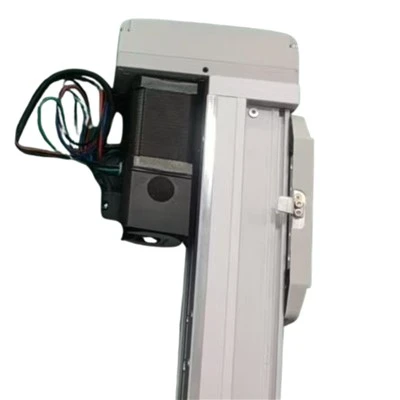
If you’re looking for a relay production line that doesn’t cut corners, and wants to work with someone who’s hands-on (I’m not a suit behind a desk, I’m the guy who’s on the line during QA checks), hit us up to talk through your needs. We can customize the QA settings to match your specs, whether you’re building for passenger cars or heavy-duty equipment. Don’t hesitate to reach out—we’re here to make sure your relays are as solid as our line’s QA.
Manipulator References
- Society of Automotive Engineers (SAE) International. (2021). Surface Vehicle Standard for Automotive Relay Performance and Testing.
- Automotive Electronics Council (AEC). (2020). Reliability Requirements for Electronic Components in Vehicle Electrical Systems.
- International Organization for Standardization (ISO). (2019). ISO/TS 16949: Quality Management Systems for Automotive Production and Relevant Service Parts.
- Relay Industry Association (RIA). (2022). Best Practices for Production Line Quality Assurance of Electromechanical Relays for Automotive Applications.
Yangning (Xiamen) Intelligent Technology Co., Ltd.
With abundant experience, we are one of the most professional automotive relay production line manufacturers in China. As we have world-leading production equipment and strong manufacturing capabilities, we warmly welcome you to buy bulk advanced automotive relay production line from our factory. Customized orders are welcome.
Address: Room 307-2, No. 15 Duiying Road, Software Park Phase III, Torch Hi-Tech Zone, Xiamen, Fujian, China
E-mail: mia@ynautos.com
WebSite: https://www.ynautos.com/
