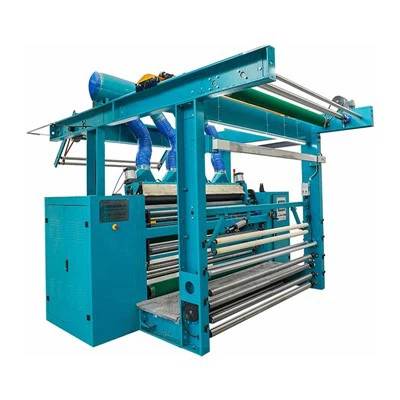
As a supplier of inspection machines, I’ve witnessed firsthand the critical role that inspection algorithms play in ensuring the quality and efficiency of manufacturing processes. In this blog, I’ll delve into the various inspection algorithms used in inspection machines, exploring their functions, applications, and benefits. Inspection Machine
1. Image – Based Inspection Algorithms
Edge Detection Algorithms
Edge detection is a fundamental algorithm in image – based inspection. It is used to identify the boundaries of objects in an image. Popular edge detection algorithms include the Sobel operator, Canny edge detector, and Roberts cross operator.
The Sobel operator calculates the gradient of the image intensity function. It uses two 3×3 kernels to approximate the partial derivatives in the x and y directions. By combining these derivatives, it can highlight the edges in the image. This algorithm is relatively simple and computationally efficient, making it suitable for real – time inspection applications.
The Canny edge detector is a more advanced edge detection algorithm. It consists of several steps, including Gaussian smoothing to reduce noise, gradient calculation, non – maximum suppression to thin the edges, and hysteresis thresholding to connect the edge segments. The Canny algorithm can produce high – quality edges with low false positives, which is crucial for accurate inspection.
The Roberts cross operator is one of the earliest edge detection algorithms. It uses a pair of 2×2 kernels to approximate the gradient. Although it is less accurate than the Sobel and Canny algorithms, it is very fast and can be used in applications where speed is of the essence.
Pattern Recognition Algorithms
Pattern recognition algorithms are used to identify specific patterns in an image. These patterns can be geometric shapes, text, or logos. Template matching is a common pattern recognition algorithm. It works by comparing a template image with the target image and finding the best match.
Another pattern recognition approach is the use of machine learning algorithms, such as neural networks. Convolutional Neural Networks (CNNs) have shown great success in pattern recognition tasks. CNNs can automatically learn the features of patterns from a large number of training images. They are highly accurate and can handle complex patterns that are difficult to detect using traditional methods.
Color Analysis Algorithms
Color analysis algorithms are used to analyze the color properties of objects in an image. They can be used to detect color defects, such as color variations or incorrect color coding. One common color analysis method is to convert the image from the RGB color space to other color spaces, such as HSV (Hue, Saturation, Value).
In the HSV color space, the hue represents the color type, the saturation represents the purity of the color, and the value represents the brightness. By analyzing these parameters, we can perform color – based inspection. For example, we can set a range of acceptable hue, saturation, and value values for a particular color, and then check if the color of the object in the image falls within this range.
2. Laser – Based Inspection Algorithms
Triangulation Algorithms
Laser triangulation is a widely used method for 3D measurement in inspection machines. It works by projecting a laser line onto the surface of an object and measuring the position of the reflected light on a camera sensor. The distance between the camera and the object can be calculated based on the principle of triangulation.
The basic formula for laser triangulation is based on the relationship between the angle of the laser projection, the distance from the laser source to the camera, and the position of the reflected light on the camera sensor. By analyzing the shape of the laser line on the object’s surface, we can obtain information about the surface profile, such as height variations, slopes, and curvatures.
Time – of – Flight (ToF) Algorithms
Time – of – Flight algorithms are used to measure the distance between the inspection machine and the object by measuring the time it takes for a laser pulse to travel to the object and back. ToF sensors emit short laser pulses and measure the time delay between the emission and the reception of the reflected pulse.
The distance can be calculated using the formula (d = c\times t/2), where (d) is the distance, (c) is the speed of light, and (t) is the time – of – flight. ToF sensors are very fast and can provide accurate distance measurements over long ranges. They are often used in applications where high – speed 3D scanning is required, such as in automotive manufacturing and robotics.
3. Ultrasonic Inspection Algorithms
Pulse – Echo Algorithms
Pulse – echo is a common ultrasonic inspection method. In this method, an ultrasonic transducer emits a short ultrasonic pulse into the object being inspected. The pulse travels through the object and is reflected back when it encounters a boundary, such as a defect or the back surface of the object.
The transducer then receives the reflected pulse, and the time delay between the emission and the reception of the pulse is measured. Based on the speed of sound in the material and the time delay, the distance to the reflecting boundary can be calculated. By analyzing the amplitude and shape of the reflected pulse, we can also obtain information about the size and nature of the defect.
Phased Array Algorithms
Phased array ultrasonic inspection uses an array of ultrasonic transducers. By controlling the phase and amplitude of the signals sent to each transducer, we can focus the ultrasonic beam at different depths and angles within the object.
Phased array algorithms are used to calculate the appropriate phase and amplitude settings for each transducer to achieve the desired beam focusing and steering. These algorithms can improve the detection sensitivity and accuracy of ultrasonic inspection, especially for complex – shaped objects and small defects.
4. Benefits of Using Inspection Algorithms in Inspection Machines
Improved Quality Control
Inspection algorithms can detect defects and deviations with high accuracy, ensuring that only high – quality products are released into the market. This helps to reduce the number of defective products, improve customer satisfaction, and enhance the reputation of the manufacturer.
Increased Efficiency
Automated inspection using algorithms can be much faster than manual inspection. Inspection machines can perform inspections at high speeds, allowing for a large number of products to be inspected in a short period of time. This can increase the production throughput and reduce the cost of inspection.
Data Analysis and Process Optimization
Inspection algorithms can generate a large amount of data about the inspected products. By analyzing this data, manufacturers can identify trends, patterns, and potential problems in the production process. This information can be used to optimize the manufacturing process, improve product quality, and reduce costs.
5. Conclusion and Call to Action

In conclusion, inspection algorithms are the heart of inspection machines. They enable accurate, efficient, and reliable inspection of products in various industries. Whether it’s image – based, laser – based, or ultrasonic – based inspection, these algorithms play a crucial role in ensuring product quality and production efficiency.
Fillet If you are looking for high – quality inspection machines equipped with advanced inspection algorithms, we are here to help. Our inspection machines are designed to meet the diverse needs of different industries, and we can provide customized solutions based on your specific requirements. Contact us to start a discussion about how our inspection machines can improve your manufacturing process and enhance the quality of your products.
References
- Gonzalez, R. C., & Woods, R. E. (2008). Digital Image Processing. Pearson Prentice Hall.
- Mechefske, C. K., & Chan, K. C. (2009). Ultrasonic Nondestructive Testing: Engineering and Biological Material Characterizations. Wiley.
- Schenk, A. (2012). Laser Scanning Metrology: Principles and Applications. Wiley.
Jiangsu Feng Te Technology Co., Ltd.
We’re well-known as one of the leading inspection machine manufacturers in China. With a professional production team, we are able to meet the needs of the majority of our customers. Please rest assured to buy discount inspection machine for sale here from our factory.
Address: No. 4 Zhanghong Road, Siying Industrial Park, Lianyungang City, Jiangsu Province, China
E-mail: 604588508@qq.com
WebSite: https://www.jsfrente.net/
