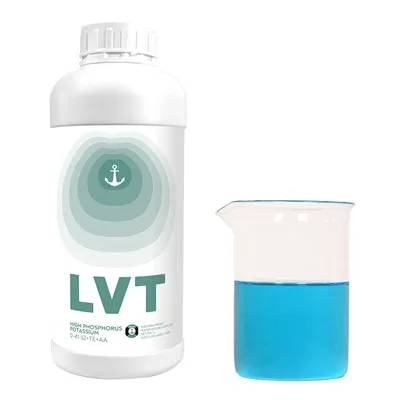
As a supplier in the agricultural industry, I often witness the profound impact of different fertilizers on crop growth. One product that has recently caught my attention for its remarkable effects is the Trace Element Zn Fertilizer with Polypeptide. In this blog, I will explore its impact on the root nodulation of legumes. Trace Element Zn Fertilizer with Polypeptide
Understanding Root Nodulation in Legumes
Root nodulation is a unique biological process that occurs in legumes, forming a symbiotic relationship with nitrogen – fixing bacteria, usually rhizobia. The bacteria infect the legume roots, leading to the formation of nodules. Inside these nodules, the bacteria convert atmospheric nitrogen into ammonia, a form of nitrogen that plants can readily use. This symbiotic nitrogen – fixation process is crucial for legumes as it provides them with a significant portion of their nitrogen requirements, reducing the need for external nitrogen fertilizers.
The efficiency of root nodulation can be affected by various factors, including soil conditions, the availability of nutrients, and the presence of beneficial or harmful microorganisms. Among the nutrients, trace elements play an important role in promoting healthy nodule formation and function.
The Role of Zinc in Root Nodulation
Zinc (Zn) is an essential trace element for plant growth. It is involved in numerous physiological processes, including enzyme activation, protein synthesis, and auxin metabolism. In the context of root nodulation in legumes, zinc plays a multi – faceted role.
Zinc is required for the proper functioning of many enzymes involved in nitrogen metabolism within the nodules. Enzymes such as nitrogenase, which is responsible for the conversion of atmospheric nitrogen to ammonia, rely on zinc for their catalytic activity. A deficiency in zinc can lead to reduced nitrogenase activity, thereby decreasing the efficiency of nitrogen fixation.
Moreover, zinc is important for maintaining the integrity of cell membranes. In the root nodules, healthy cell membranes are necessary for the exchange of nutrients and signals between the legume plant and the rhizobial bacteria. A lack of zinc can lead to membrane damage, disrupting the symbiotic relationship and reducing nodule formation and function.
The Added Value of Polypeptides
Polypeptides are short chains of amino acids that have been shown to have various beneficial effects on plant growth. When combined with zinc in a fertilizer, they can enhance the uptake and utilization of zinc by the plants.
Polypeptides can act as chelating agents for zinc. Chelation helps to protect the zinc ions from being tied up in the soil by other chemical components, making it more available for plant roots to absorb. Additionally, polypeptides can stimulate root growth and development. Longer and more branched roots have a greater surface area for nutrient uptake, increasing the likelihood of successful infection by rhizobia and subsequent nodule formation.
Polypeptides also have a role in modulating plant hormonal balance. They can influence the production and action of hormones such as auxins, cytokinins, and gibberellins, which are involved in cell division, differentiation, and growth. In the context of root nodulation, proper hormonal balance is essential for the initiation and development of nodules.
Field Studies on the Effect of Trace Element Zn Fertilizer with Polypeptide
In recent field trials, the application of Trace Element Zn Fertilizer with Polypeptide on legume crops has shown promising results.
In a study on soybeans, plots treated with the zinc – polypeptide fertilizer had a significantly higher number of nodules per plant compared to the control plots. The size of the nodules was also larger in the treated plots. This increase in nodule number and size was correlated with an increase in nitrogen fixation efficiency. Plants in the treated plots had higher levels of nitrogen in their tissues, which directly translated into better growth and higher yields.
Another study on peanuts demonstrated similar findings. The use of the zinc – polypeptide fertilizer improved root nodulation and enhanced the overall health of the plants. The peanuts in the treated plots were more resistant to stress factors such as drought and disease. This could be attributed to the improved nitrogen status of the plants, as well as the overall enhancement of plant metabolism due to the availability of zinc and the modulating effects of polypeptides.
Implications for the Agricultural Industry
The positive effects of Trace Element Zn Fertilizer with Polypeptide on legume root nodulation have far – reaching implications for the agricultural industry.
From an environmental perspective, enhanced nitrogen fixation by legumes reduces the reliance on synthetic nitrogen fertilizers. Synthetic nitrogen fertilizers are energy – intensive to produce and can have negative environmental impacts, such as groundwater pollution and greenhouse gas emissions. By promoting natural nitrogen fixation through improved root nodulation, the use of this fertilizer can contribute to more sustainable agricultural practices.
For farmers, the use of this fertilizer can lead to increased yields and better – quality crops. Higher yields mean more income, while better – quality crops can fetch a higher price in the market. Additionally, the improved stress resistance of the crops can reduce the risk of crop failure, providing greater economic stability for farmers.
How Our Product Stands Out
As a supplier of Trace Element Zn Fertilizer with Polypeptide, I am proud to offer a product that is based on the latest scientific research. Our fertilizer is formulated using high – quality zinc sources and polypeptides that are carefully selected for their effectiveness.
We have conducted extensive internal testing to ensure the consistency and quality of our product. Each batch of fertilizer is rigorously tested to meet strict quality standards. Our production process is designed to maximize the bioavailability of zinc and the activity of polypeptides, ensuring that plants can fully benefit from the nutrients.
We also provide excellent customer support. Our team of agronomists is available to offer advice on the proper application of the fertilizer, taking into account factors such as soil type, crop variety, and local climate conditions. This personalized service helps farmers to get the most out of our product.
The Future of Trace Element Zn Fertilizer with Polypeptide
The potential of Trace Element Zn Fertilizer with Polypeptide in improving legume root nodulation is just beginning to be explored. There is still much research to be done to fully understand the complex interactions between zinc, polypeptides, legumes, and rhizobia.
In the future, we expect to see further improvements in the formulation of this fertilizer. New research may lead to the identification of more effective zinc sources and polypeptides, as well as the development of novel delivery systems to enhance nutrient uptake.

As awareness of sustainable agriculture grows, the demand for products like our Trace Element Zn Fertilizer with Polypeptide is likely to increase. We are committed to continuing our research and development efforts to meet the evolving needs of the agricultural industry.
Contact for Purchase and Discussion
Trace Element Zn Fertilizer with Polypeptide If you are a farmer, agricultural researcher, or anyone interested in improving legume production, I encourage you to contact us to discuss the purchase of our Trace Element Zn Fertilizer with Polypeptide. We can provide you with more detailed product information, answer any questions you may have, and work with you to develop a customized fertilization plan for your specific needs. Don’t miss out on the opportunity to enhance your legume crop yields and contribute to a more sustainable agricultural future.
References
- "Zinc in Plant Nutrition: A Review." Annual Review of Plant Biology.
- "Role of Polypeptides in Plant Growth and Development" Journal of Plant Physiology.
- "Field Trials on the Effect of Trace Element Fertilizers on Legume Root Nodulation." Journal of Agricultural Science.
Weifang Lvweite Bio-Tech Co., Ltd.
With abundant experience, we are one of the leading manufacturers and suppliers of trace element zn fertilizer with polypeptide in China. Please rest assured to buy bulk high quality fertilizers made in China here from our factory. If you have any enquiry about cooperation, please feel free to email us.
Address: No. 6 Xinchuan Rd, Xin’an Street, Anqiu City, Shandong, China
E-mail: info@lvtfertilizer.com
WebSite: https://www.lvtfertilizer.com/
