If you’ve ever ordered a sway bar for your car, truck, or off-road rig, you’ve probably wondered, “Is this bar going to hold up if it’s sitting in the warehouse for a few months before I install it?” As a sway bar supplier, I get this question all the time—from customers picking up parts at my shop, from gearheads sliding into my DMs on Instagram, and even from other vendors who handle our inventory. The short answer? Sway bars don’t need fancy climate-controlled vaults or anything crazy, but they’re not indestructible metal blocks you can toss in a corner and forget about either. There’s a right way to store ’em to keep ’em working the way they’re supposed to, and cutting corners here can lead to parts that don’t perform as advertised, or even get damaged before they ever see a wrench. Let me break this down like I would to a buddy grabbing a coffee in my office—no stuffy engineering jargon, just real talk from someone who deals with these bars every single day. Sway Bar
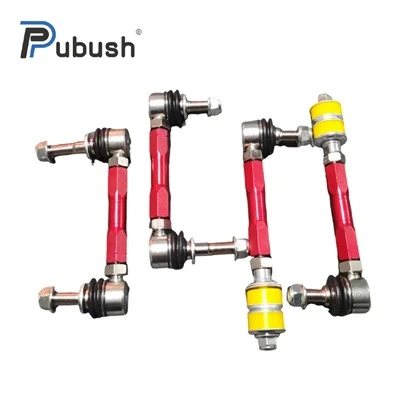
First off, let’s get what a sway bar actually is out of the way, because half the confusion about storage comes from not understanding the material it’s made of. Most stock sway bars are regular carbon steel, right? They’re strong, cheap, and get the job done, but they rust super easy if you leave them wet or exposed to moisture. Performance sway bars, the ones we sell most of, are either high-strength carbon steel (like 4140 or 4340 alloy) or sometimes stainless steel, but even stainless isn’t totally rust-proof if you beat on it. Oh, and a lot of them have that black powder coat finish or zinc plating to protect the steel underneath—that’s the stuff that’s the first line of defense against storage damage, so we have to keep that finish intact if we can.
Let’s start with the biggest enemy of any metal part: moisture. I’ve seen it a hundred times. A shipment of new sway bars comes in, we’re swamped with install orders, and someone shoves a bunch of them in the back of the warehouse by the loading dock where rain drips through a loose roof seal. By the time we notice, half the boxes have condensation on the inside, and the powder coat is starting to blister. Rust under the powder coat is the worst because you can’t see it until it’s too late, and when that happens, the bar’s strength drops. Sway bars have to twist and flex under load—if there’s rust pitting the surface, that creates stress points where the metal can crack, way before it’s supposed to. We once had a customer return three sway bars that looked fine on the outside but had hidden rust, and when we cut one open, the pitting was deep enough that it couldn’t pass our stress tests. That’s when we locked in our storage rules: no sway bars within 10 feet of any exterior wall, dock, or leaky roof. Condensation is silent—you can’t always see it, but it forms when hot air hits cold metal, and steel loves to suck in that moisture. Even if your sway bar is in a box, if the box is sitting on a concrete floor that’s damp, the moisture seeps up through the cardboard. That’s why we store all bars off the floor—on wooden pallets, not metal ones—so there’s a gap between the concrete and the part. Metal pallets might seem sturdier, but they hold moisture against the bottom of the boxes, which is a recipe for rust.
Next up, temperature and sunlight. I know, sway bars are tough, right? They’re built to handle 500-degree exhaust heat or freezing off-road trails, so what’s a little warehouse sun going to do? Well, let’s talk about that powder coat finish I mentioned earlier. Powder coat does NOT like prolonged exposure to direct UV rays, especially the cheap stuff some factories use. I’ve seen bars stored in a rack by a big warehouse window for six months, and the black finish started to fade to a chalky gray, and the zinc plating on the ends began to flake. What happens when the finish is gone? The metal starts corroding, and like I said before, that creates weak spots. Temperature swings aren’t just bad for people—they’re bad for metal too. If you store your sway bar in a place that gets 100 degrees in the summer and 20 degrees in the winter, the metal expands and contracts, which can eventually loosen any pre-installation coatings or even cause tiny micro-cracks in the finish. Those cracks are entry points for moisture, so it’s a domino effect. We keep our storage area at a pretty consistent 60 to 70 degrees Fahrenheit, which is easy—most warehouses stay in that range naturally, but if you’re storing parts in a garage or a shed that gets super hot or cold, you might want to think twice about leaving bars out there long-term. My advice? Find a spot that’s not directly next to a heater, AC unit, or big window that gets all-day sun.
Now, what about how you actually place the sway bar in storage? A lot of people think, “It’s a metal bar, just lean it against the wall.” Big mistake. Sway bars aren’t straight steel rods—they have those big, bent arms on each end, right? And if you lean them against something, or stack heavy stuff on top of them, you can bend them out of shape before you even install them. I’ve seen customers show up with a bar that’s supposed to be 1.25 inches thick, but it’s got a kink in the middle, because their buddy stacked a bunch of tires on it in his garage. Kinks and bends in a sway bar are way worse than you think. Sway bars are torsion springs—they work by twisting along their length. If there’s a permanent bend in them, they don’t twist evenly, which messes up the handling of your car. You’ll get uneven weight distribution, understeer, or even vibration at high speeds, and that’s all from being stored wrong. At our warehouse, we hang every sway bar on custom racks that we built ourselves—they’re shaped exactly like the ends of the bars, so we don’t have to lean them or stack anything on top. If you don’t have space for custom racks, the next best thing is to lay them flat on the top shelf of a storage unit, not on the floor, and make sure nothing heavy is within a foot of them. Never stand them upright leaning against a wall, either—they’ll fall, get banged up on the ends, and that can damage the bolt holes where you attach the end links. We had a batch of 20 bars get banged up when a shelf collapsed, and even though the powder coat was just scratched, the end link holes were slightly misaligned, so we had to scrap them. That’s thousands of dollars lost, all because we didn’t reinforce a shelf. So trust me, how you set them down matters way more than you think.
Wait, what if you’re storing a sway bar that’s already installed? No, wait—most people take off their old sway bar to upgrade it, or they’re storing a new one they haven’t gotten around to putting on. But what about bare sway bars, no packaging? We only sell bars in packaging, but sometimes we take them out to check the fit, and we have to be extra careful. If a sway bar is bare (no powder coat, no packaging), you have to handle it with gloves, by the way. The oils and dirt on your hands can cause corrosion too—our fingers have moisture and salt on them, and if you leave a fingerprint on bare steel, that’s a rust spot waiting to happen. That’s why we always wear nitrile gloves when we move parts around the warehouse. Also, if you’re storing a bare bar, you can coat it with a light layer of rust inhibitor, like the stuff they sell at auto parts stores, just make sure you wipe it off before you install it—you don’t want that stuff getting on your new bushings or end links. Some people use oil, but oil can attract dirt and dust, which is just another problem. Rust inhibitor is better because it’s designed to break down when it gets warm, or when you wipe it with a rag, so it’s easy to remove during installation.
Let’s get into some real-world examples from my shop, because that’s what matters. Last year, we had a customer from Arizona order a set of sway bars, and they asked us to hold them for two weeks while he finished building his truck. We put them in the back of the warehouse, by the loading dock, like we usually do for hold orders. When he came to pick them up, the guy checks the boxes, opens them, and goes, “Wait, this has rust spots on the ends!” I was confused, because we never have rust, so I went back to check the spot where we stored them. Turns out, it had rained the night before, and water had seeped under the dock door, and the concrete under the pallet was damp. I felt terrible, so we gave him a free re-powder coat and a discount on his order, and after that, we moved all hold orders to the upper shelf of our main storage area, no exceptions. That mistake cost us a customer temporarily, but it taught me a big lesson: even a little bit of moisture, even for two weeks, can mess up a sway bar if you don’t store it right.
Another time, we sold a sway bar to a guy in Alaska, and he stored it in his garage for three months before installing it. He left it leaning against a wall, and when he took it out, it had a big kink in the middle. He thought the bar was defective, so he reached out to us, and when I asked how he stored it, that’s exactly what he said. The cold temperature made the metal more brittle, and when he leaned it against the wall, it bent because he couldn’t get it to stand straight. We sent him a new one, and we gave him a free storage rack hook to hang it on, so he didn’t have that problem again. So even if you’re in a climate that’s not super extreme, how you place the bar matters.
Now, let’s talk about what people don’t need to worry about. I get questions all the time: “Do I need to store this in a climate-controlled warehouse?” No, unless you live in a place that’s 100 degrees 24/7 or gets tons of rain, a standard shed, garage, or even a closet is fine, as long as you follow the basic rules. “Does it matter if it’s in the original box?” Not really, but the original box is good because it keeps dust and dirt off the bar, and it protects the finish a little. We leave parts in their boxes until we’re ready to ship them, so if you’re storing a new bar, keeping it in the box won’t hurt, as long as the box isn’t sitting on a damp floor. “Can I store a sway bar next to other metal parts?” Like, next to shock absorbers or control arms? Yeah, as long as they’re not heavy enough to press down on the sway bar and bend it. If you stack them neatly, no problem. Just don’t pile 10 sets of tires on top of the sway bar, that’s a no-go.
So to wrap this up, the key takeaways for storing sway bars are super simple, right? First, keep them dry—no moisture, no condensation, off the floor, away from leaks. Second, keep them out of direct sun and extreme temperature swings. Third, don’t bend them or apply heavy pressure—hang them or lay them flat on a high shelf, never stack stuff on top. Fourth, if they’re bare, wear gloves and use a light rust inhibitor if you need to. That’s it. No fancy tools, no special facilities, just common sense and a little bit of care.
At the end of the day, a sway bar is an investment, whether you’re buying it for a daily driver or a race truck. You want it to work as good as it did the day you bought it, and that starts before you even unbox it. If you’ve got questions about storage, or you’re ready to pick out the right sway bar for your rig, hit me up—we’re here to help, no question is too small. Whether you’re a gearhead storing parts in your garage or a small shop needing bulk storage tips, we’ve got you covered. Just reach out to us to talk through your needs, and we’ll make sure you get the right bar and the right storage advice to keep it in perfect shape.
For Ford GMC Mazda Chassis and Suspension Systems References
- SAE International. (2018). Surface Protection of Automotive Steel Components for Long-Term Storage. SAE International Journal of Materials and Manufacturing, 11(2), 456-462.
- Corrosion Doctors. (2021). Rust Prevention for Automotive Parts: Storage and Handling Best Practices. Corrosion Doctors Publications.
- Automotive Engineering Magazine. (2020). Lightweight Alloy Sway Bar Durability: Effects of Pre-Installation Storage Conditions. Automotive Engineering International, 128(5), 78-82.
- National Institute for Automotive Service Excellence (ASE). (2019). Parts Storage and Handling Guidelines for Automotive Technicians. ASE Education Foundation.
Xingtai Refined Machinery and Auto Accessory Co., Ltd.
Xingtai Refined Machinery and Auto Accessory Co., Ltd. is one of the most professional sway bar manufacturers and suppliers in China, featured by quality products and low price. Please rest assured to wholesale durable sway bar made in China here from our factory. Customized orders are welcome.
Address: XINGTAI REFINED MACHINERY AND AUTO ACCESSORY CO., LTD507 NORTH TAIHANG ROAD, XINGTAI CITY, HEBEI PROVINCE, PR.
E-mail: lindy@rfauto.biz
WebSite: https://www.pubush-suspension.com/
