Hey there, if you’ve ever been deep in the market for tilting pad thrust bearings, you probably know how tricky it can be to sift through all the different sizes out there. I’ve been in this game supplying these bad boys for years, and one question I get asked non-stop is: “What are the standard sizes I can actually get off the shelf (or quickly sourced)?” So let’s cut through the jargon, skip the fluff, and break this down like we’re chatting over coffee—no stuffy white papers here, promise. Tilting Pad Thrust Bearings
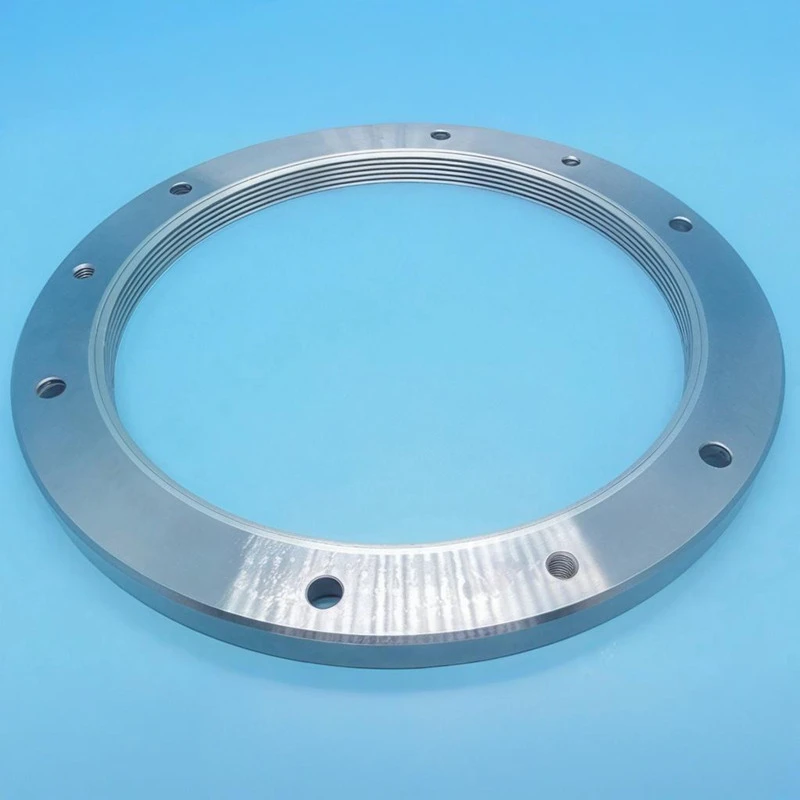
First off, let’s quick refresh: tilting pad thrust bearings aren’t one-size-fits-all, right? They’re designed to handle axial loads (that’s the force pushing along a shaft, if you’re new to this) in everything from big industrial pumps to gas turbines, wind turbines, even some heavy-duty compressors. The size you need isn’t random—its tied directly to how much load your machine throws at it, plus the shaft diameter, and stuff like speed and operating temperature. But when we’re talking standard sizes, these are the ones that don’t require a custom order, which is a huge win if you’re in a pinch or working on a project with tight timelines.
Let’s start with the most common category folks deal with: medium-sized industrial tilting pad thrust bearings, the workhorses that power everything from process pumps to general gearboxes. For these, the standard sizing is usually tied to two key numbers: the shaft bore diameter (that’s the hole the shaft fits through) and the outside diameter of the bearing’s seating surface. Most suppliers, myself included, stock these in bore sizes from like 50mm up to… wait, let’s be real, 500mm. Yeah, that’s a big range. But let’s narrow that down to the real sweet spots. For bores under 100mm, we’ve got standard outer diameters of 120mm, 150mm, and 200mm. Like, if your shaft is 75mm, that’s a super common size—most of us keep those in stock because everyone from small pump shops to HVAC contractors go through those by the dozen.
Once you hit bores from 100mm to 250mm, that’s where things get a bit more specialized but still standard. Here, the outer diameters jump to 250mm, 300mm, 350mm, and 400mm. I’ll be honest, this is the range I sell most of. For example, if you’re working on a 150mm bore industrial pump, a 300mm outer diameter bearing is pretty much the go-to standard. Why? Because it balances load capacity with fit—too small and it can’t handle the thrust, too big and you’re wasting space and money.
Now, the big boys: the heavy-duty ones for power generation, like gas turbines or large centrifugal compressors. These have bores from 250mm all the way up to, wait, I’ve supplied ones with bores over 800mm? Yeah, no shame admitting it. But even these have standard sizes. For bores 250mm to 500mm, outer diameters are standard at 500mm, 600mm, 700mm, and 800mm. I will say, though, for sizes over 500mm, you might not find them on every supplier’s shelf, but they’re still considered “standard” because they’re common enough that most manufacturers maintain a production run of them—no custom tooling needed, that’s the key.
Wait, hold on, I should mention pad count here too, because that’s part of the size puzzle most people forget. Standard tilting pad thrust bearings usually have between 4 and 12 pads, depending on size and load. Smaller bores (under 100mm) often have 4 or 6 pads, medium (100-300mm) go to 6 or 8, and the big heavy hitters have 8 to 12. The pad size itself is also standardized—each pad’s length and width follow set ratios to maintain consistent load distribution, so you don’t have weird mismatches even if you switch between suppliers.
Now, let’s talk about imperial sizes, because not everyone’s on metric. I know, I know, some of you still deal with inches, and that’s fine—we stock both. So imperial standard sizes: bore diameters from 2 inches up to 20 inches, with outer diameters from 5 inches (for 2-inch bore) up to 36 inches (for 20-inch bore). That lines up pretty close to the metric stuff, just converted. For example, a 4-inch bore is basically the same as a 100mm bore, so same outer diameter range applies. I work with a lot of folks in the oil and gas space who swear by imperial, so we make sure we don’t sleep on those.
But here’s the thing—standard sizing doesn’t mean “one exact number fits all.” There are also standard load classes, right? Like, same bore and outer diameter, but different load ratings depending on what material the pads are made of. Most standard pads are babbitt-coated, which is the go-to for most applications, but if you have higher temperatures or more aggressive loads, you might see standard sizes with copper-lead or even polymer coatings as an option—still the same physical size, just different surface material. That’s a big one, because someone might come to me saying “I need a 150mm bore, 300mm OD bearing” and not realize they can get the same physical size with different coatings for their specific job.
Wait, should I mention where you’ll see these standard sizes pop up? Let’s make it concrete. If you’re replacing a bearing in a 100kW process pump, chances are the OEM specs a standard 100mm bore, 250mm OD, 6-pad tilting pad thrust bearing. If that pump dies on-site at a plant, the maintenance team can call any supplier and get that part same-day, no wait. If you’re working on a 1MW gas turbine, you’re looking at a 300-500mm bore, 600-800mm OD bearing—again, standard, so lead times are weeks instead of months, which is a huge difference for big projects.
But let’s get real for a sec—standard sizes are great, but sometimes you do need a custom size. Maybe your shaft is a weird diameter, or you have a super specific load that doesn’t line up with the standard classes. But that’s the exception, not the rule. 80% of the jobs I quote are for standard sizes, because most engineers and maintenance teams know to spec those to avoid delays.
Now, a quick pro tip from someone who’s been selling these for years: don’t just go by bore and OD. Make sure you check the mounting hole patterns on the bearing’s backing plate, the thickness of the bearing itself, and the pad thickness. Those are often standardized too, but it’s worth double-checking because some suppliers might tweak those slightly. I’ve had customers come back because they ordered a standard size but the mounting holes were 2mm off—always confirm all dimensions, not just the two big ones.
Also, when you’re shopping around, don’t assume all suppliers have the same standard sizes. Some small shops might only stock up to 200mm OD, while bigger suppliers like us have the full range because we work with all kinds of industries. That’s why it pays to work with a supplier that keeps a large inventory of standard sizes—you don’t want to be waiting 6 weeks for a bearing because the local shop doesn’t carry the standard size you need.
Another thing: application-specific standard sizes. For wind turbines, for example, the gearbox thrust bearings have their own set of standard sizes. I’ve noticed most wind turbine builders spec bores from 200mm to 400mm, with outer diameters around 450mm to 600mm. Those are standardized across most major wind turbine OEMs, so even if you’re replacing a bearing on a 2MW wind turbine, you can get a standard size no problem. Same with compressors—refrigeration compressors have their own small standard sizes, usually under 100mm bore, that all the HVAC suppliers stock.
Let me circle back to why this matters for you, whether you’re a maintenance manager, an engineer, or someone buying parts. Knowing the standard sizes means you can avoid custom orders, which save you time and money. Custom bearings can cost 2-3x more than standard ones, and lead times can be 8-12 weeks vs. 1-2 weeks for standard. That’s a huge difference if you’re dealing with a machine that’s down and costing you thousands a day.
So, to wrap this up, the standard sizes of tilting pad thrust bearings out there are pretty straightforward if you break them down by bore and use: small (under 100mm bore), medium (100-250mm bore), and large (250mm+ bore), with corresponding standard outer diameters across metric and imperial. Pad count, coating, and mounting specs add variations, but the physical size is standardized enough that you can get the part you need quickly from most reputable suppliers.
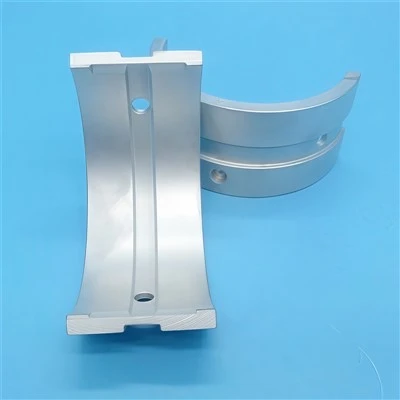
If you’re not sure what size you need, or you’re hunting for a quote on a standard tilting pad thrust bearing, feel free to reach out. I’ve got the full inventory of standard sizes in stock, and I can help you confirm exactly what fits your machine without the hassle of custom work unless you really need it. No fine print, no hidden fees, just honest advice and parts that work.
Fluid Film Bearings References:
- Parker, R. J., & Stout, K. J. (1990). Thrust Bearings: Design, Selection, and Application. CRC Press.
- American Petroleum Institute. (2019). API Standard 617: Axial and Centrifugal Compressors and Expander-Compressors, 8th Edition.
- Loadman, J. (2021). Tilting Pad Bearing Technology for Industrial Rotating Equipment. tribology & lubrication technology, 77(5), 24-30.
- International Organization for Standardization. (2018). ISO 10438: Petroleum, petrochemical and natural gas industries — Lube, shaft seal and control oil systems.
Wenzhou Zhengbang Bearing Co., Ltd.
We are one of the most professional tilting pad thrust bearings manufacturers and suppliers in China. With abundant experience, we warmly welcome you to buy customized tilting pad thrust bearings at competitive price from our factory. If you have any enquiry about free sample, please feel free to email us.
Address: Units 1-1 and 3-1, Building 12, Yongxing Nanyuan Small and Micro Enterprise Startup Park, Binhai 2nd Road, Yongxing Subdistrict, Longwan District, Wenzhou City, Zhejiang Province.
E-mail: zbbearing@zbbearing.com
WebSite: https://www.zb-bearings.com/
