If there’s one question I get asked more than any other as a poncho fabric supplier, it’s this: “What’s the breathability rate of your poncho material?” Poncho Fabric
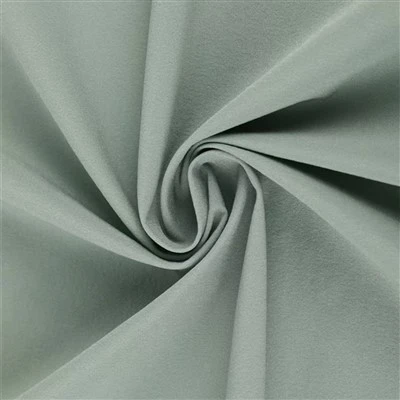
It’s a fair question. Ponchos, after all, aren’t just a trendy accessory for festivals, camping trips, or rainy commutes—they’re a functional layer that needs to work with you, not against you. I’ve seen too many ponchos that leave the wearer damp, hot, and frustrated by midday, turning a simple piece of outerwear into a burden. That’s why I’ve spent the last 12 years refining my approach to fabric: breathability isn’t a “nice-to-have” feature, it’s non-negotiable. Today, I want to break down what breathability rate actually means, how we test it, why it matters for poncho fabric, and how our product stacks up—straight from the supplier who’s talked to thousands of buyers, small boutique owners, and outdoor gear brands about this exact topic.
First, let’s cut through the jargon. A lot of people throw around terms like “breathable fabric” or “moisture-wicking” like they’re the same thing, but they’re not. Breathability rate, when we’re talking about textiles, is officially defined as the amount of water vapor a fabric can pass through in a set amount of time, under specific conditions. It’s measured in grams per square meter per 24 hours (g/m²/24h)—that’s the standard industry benchmark, set by the American Association of Textile Chemists and Colorists (AATCC) Test Method 127, which is the gold standard for this kind of testing. For context, a fabric with a breathability rate below 3,000 g/m²/24h is generally considered low-breatheable, often used for things like heavy upholstery or non-active outerwear. A rate between 3,000 and 8,000 g/m²/24h is mid-range, good for casual use but not ideal for activities that make you sweat. Above 8,000 g/m²/24h is high-performance, and that’s the sweet spot we target for our poncho fabric.
Wait, you might be thinking—ponchos are usually rainproof, right? How can something be both waterproof and breathable? That’s the magic of modern textile engineering, and it’s the reason we don’t use cheap, plastic-like vinyl for our poncho fabric. Vinyl is waterproof, but it’s almost completely non-breathable—so when you sweat under a vinyl poncho, the moisture has nowhere to go, and you end up with a clammy, uncomfortable layer against your skin. That’s not a poncho; that’s a plastic bag. Our fabric uses a laminated microporous membrane, which is treated with microscopic holes so small they can block liquid water (a raindrop is roughly 10,000 times bigger than a water vapor molecule) but let sweat vapor escape. But even not all microporous membranes are the same, and that’s where the difference in breathability comes from.
A lot of suppliers cut corners on that membrane, using thin, low-quality layers that clog easily, or skimp on the bonding process between the membrane and the outer fabric. We don’t do that. For our poncho fabric, we use a 100% polyester outer layer that’s been brushed on the inner side for softness, laminated to a 10-micron microporous membrane (that’s roughly 1/5 the width of a human hair, for perspective). We test every batch of fabric before it leaves our warehouse to make sure it hits our minimum required breathability rate of 8,500 g/m²/24h—some batches even clock in at over 9,200 g/m²/24h, depending on the exact weight and finish a buyer requests.
But breathability rate isn’t a one-size-fits-all number, and that’s a mistake a lot of new buyers make. They’ll come to us and say “I need a poncho fabric with 10,000 g/m²/24h,” without thinking about what the poncho will be used for. For example, a poncho designed for festival goers who are standing in the sun for 12 hours dancing will need higher breathability than a poncho designed for a hiker who only uses it to cover their pack while they’re moving. A poncho for kids playing at the playground needs to be breathable enough to prevent overheating during active play, but maybe not as high as a performance poncho for trail runners. We work with every buyer to adjust the fabric’s weight, membrane type, and even the number of lamination layers to meet their specific needs. If you need a lighter, more packable poncho for travel, we can adjust the membrane to hit a slightly lower breathability rate (but never below 7,800 g/m²/24h—our minimum for any functional poncho fabric) to keep it lightweight, without sacrificing comfort. If you need a heavy-duty poncho for construction workers or expedition use, we can boost the breathability rate to over 9,500 g/m²/24h to handle heavy sweating during strenuous work.
I’ve seen the proof of this in real-world use, not just lab tests. Last year, we shipped a bulk order of our standard poncho fabric to a small outdoor gear brand that makes ponchos for backcountry campers. Their first feedback came a week after delivery: a camp leader emailed us to say that their group had been caught in a 3-hour downpour, and when they stopped to set up their tents, they pulled off their ponchos and found their base layers were only slightly damp, not soaked through. That’s exactly what breathability is supposed to do: let the sweat you produce during hiking escape, while keeping external rain out. Contrast that with the cheap ponchos the same brand had used from another supplier the year before, which left their whole group drenched after an hour of activity even in light rain. The difference wasn’t just the breathability rate—it was how consistent that rate was, even after washing.
That’s another big point most people don’t talk about: breathability rate degrades over time, especially if you don’t care for your fabric correctly. A lot of suppliers’ lab numbers are for brand-new fabric, but after 5 washes, that rate can drop by 30% or more because the membrane clogs with detergent residue or fabric softener. That’s why we don’t just test our fabric when it’s new—we test it after 20 standard washes, following AATCC care instructions, and we require all our buyers to include care guidelines that say to use mild detergent, avoid fabric softeners, and hang dry (not machine dry) to keep the breathability rate high. For example, our fabric’s breathability rate after 20 washes is still 7,200 g/m²/24h, which is still mid-range at worst, and perfect for regular use. Other suppliers often don’t test for long-term performance, so their customers get a great product for a few uses, then it becomes useless.
I get that not every poncho buyer is a textile engineer, and numbers can feel overwhelming. Let’s put that 8,500 g/m²/24h number in everyday terms. If you’re wearing our poncho fabric on a 70°F (21°C) day, walking at a moderate pace, you’ll produce roughly 500 grams of sweat vapor per hour. That means our fabric can let all of that sweat escape in less than an hour and a half. If you’re dancing at a festival on a 80°F (27°C) day, you might produce 1,000 grams of sweat per hour—and our fabric can handle that in under two and a half hours. Compare that to a mid-range fabric with 4,000 g/m²/24h, which would take 2.5 hours to process 500 grams of sweat, meaning you’d be sitting in damp, uncomfortable fabric long before the end of a day.
There’s a common myth that more breathable fabric is less waterproof, and that’s a concern we hear from a lot of buyers. It’s true that very high breathability rates can sometimes mean thinner membranes, but our testing shows that our fabric’s hydrostatic head (the measure of how much water pressure it can withstand before leaking) is still over 10,000 mm. For context, a hydrostatic head of 1,000 mm is enough for light rain, and 5,000 mm is enough for heavy, prolonged rain. 10,000 mm means our fabric can stand up to a 10-meter column of water—so even in a severe thunderstorm, you won’t leak through the poncho. That balance of waterproof and breathable is what makes our fabric stand out, and it’s something we’ve worked on for years to get right.
As a supplier, transparency is the most important thing to me. I don’t hide our breathability rates, and I don’t inflate numbers to make our fabric sound better than it is. We have full test reports available for every batch of fabric we ship, and we’re happy to send them to any buyer before they place an order. I’ve had buyers come to me in the past because another supplier told them their fabric had a breathability rate of 12,000 g/m²/24h, but when they tested it, it was actually less than 5,000. That’s not just misleading—it’s bad for business. A poncho that doesn’t breathe will leave your customers unhappy, and they won’t come back. Our goal is to make fabric that works, that performs, and that we’d be proud to use ourselves.
I started this business because I was frustrated with the quality of poncho fabric available to small brands. Too often, it’s an afterthought—something that’s cheap to make, but doesn’t work. Breathability isn’t just a technical spec; it’s about comfort, about making a product that people actually want to use, not just buy. Whether you’re a boutique owner making ponchos for local markets, a brand making outdoor gear for hikers, or a retailer looking to stock ponchos for holiday shoppers, the breathability rate of your fabric will make or break your product.
If you’re tired of ponchos that leave your customers damp and unsatisfied, if you want a fabric that’s tested, consistent, and delivers on the promise of being both waterproof and breathable, I’d love to talk. We can send you sample swatches, share full lab test reports, and work with you to adjust the fabric to meet your exact needs. Don’t settle for cheap, untested fabric—your customers deserve better, and so do you. Reach out, and let’s build something that works.
Shade Cloth References
- American Association of Textile Chemists and Colorists. (2021). Test Method 127: Water Vapor Transmission of Fabrics. AATCC Technical Manual.
- Rossi, R. M. (2018). Textile Breathability: Fundamentals and Testing Methods. Journal of Textile and Apparel, Technology and Management, 10(2), 1-12.
- Outdoor Industry Association. (2020). Performance Textile Standards for Outerwear. OIA Product Testing Guidelines.
- Zhang, L., et al. (2022). Durability of Microporous Membrane-Laminated Fabrics After Home Washing. Textile Research Journal, 92(15-16), 2245-2256.
Wujiang Jiashunxin Spray Weaving Co., Ltd.
As one of the most professional poncho fabric manufacturers and suppliers in China, we’re featured by quality products and good service. We warmly welcome you to wholesale bulk customized poncho fabric from our factory. If you have any enquiry about free sample, please feel free to email us.
Address: Xingli New Village, Lili Town, Wujiang District, Suzhou City, Jiangsu Province
E-mail: xuzhiqiang20260525@163.com
WebSite: https://www.shunbangfabric.com/
