Hey there, if you’ve ever stood in a hardware store, picked up a box of nails, and thought, “Wait, these are all straight, no bent ends, no weird burrs?” that’s not just luck. That’s your nail processing line working exactly how it’s supposed to. As a supplier who’s spent 12 years debugging these lines (I still have a scar on my left hand from a 2018 misfeed on a wire nail line—don’t ask), I get it: quality control on a nail line isn’t just “check a few nails at the end.” It’s a step-by-step, every-minute thing that keeps your output from getting rejected, wasting material, and tanking your production schedule. Let’s break this down like I’d explain it to a new plant manager I met at a tradeshow last month—no jargon, no fake “industry secrets,” just real stuff that actually works. Nail Processing Line
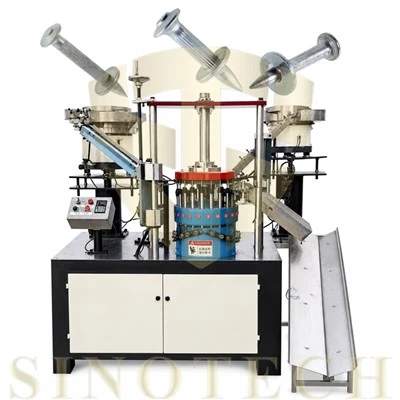
First off, let’s start with the raw material, because bad wire in = bad nails out. I see so many shops skip this, but it’s the #1 cause of line stops later. The wire you bring in—what grade is it? Most standard nails use low-carbon steel, but if you’re buying off-spec wire (say, a 16-gauge wire that’s actually 15.8 gauge, or has tiny surface rust), your line will fight you. Bent wire will cause misfeeds, which jam the heading machine. Rust? That makes the nails snap when you’re cutting them, or leave rough spots that customers complain about. Here’s a trick I push: don’t just rely on your wire vendor’s COA (Certificate of Analysis). Do a 10-minute check every time a new coil comes in. Grab 10 feet from the start of the coil, roll it on a flat table—if it wobbles, that’s off-center. Weigh a 1-foot section to check gauge. If it’s not within 0.001 inches of the spec, send it back. I’ve had a customer save $12k in rejects last year just by doing that extra check instead of running 3 coils of bad wire before noticing. Also, store the wire coils in a dry space—no floor storage. Even a little humidity will turn that wire to rust before it even hits the line.
Next, the line’s calibration—this is where most people mess up, especially if they bought a used line. I see guys set up a line, run 100 nails, think it’s good, then keep going for 8 hours. Newsflash: every part of the line shifts a little, even if it’s new. Let’s go through the key stations one by one. First, the drawing die: that’s the part that pulls the wire to the right gauge. If it’s worn, the wire isn’t round, which makes the nail shank wobble. How often do you check that? Every 200,000 nails, or every coil change. We supply our lines with a digital caliper that alerts you if the wire is off, but if you’re running an older line, just measure every 5,000 nails. Then the heading machine—this is where the nail head is formed. The die that makes the head has to be aligned perfectly. If it’s off, you get “double heads” or heads that are too small. Last month, a customer of ours had a 2-hour stop because their heading die was 0.5mm off—they were making nails with heads that fell off when customers hammered them. The fix? We send a small alignment tool with every line, and we remind people to use it every time they change the heading die (which is every 100,000 nails). Another big one: the cutting station. The cut-off blade has to be sharp, and the distance between the blade and the heading die has to be exact. If it’s too far, you get a “split shank” where the end of the nail is ragged. We’ve had customers tell us their reject rate dropped 1.5% just by replacing the cut-off blade every 50,000 nails instead of waiting for it to break. Small cost, big savings.
Then, in-line inspection—no more just checking a sample at the end. I know a lot of guys think “our end-of-line inspector is enough,” but that’s like checking a cake after it’s burned. You need to catch mistakes before they turn into a hundred bad nails. The good news is, modern nail lines have cheap, easy-to-install sensors that do this. For example, a metal sensor right after the cutting station that checks if every nail is straight—if a bent nail comes through, the sensor kicks it out before it hits the bin. A vision sensor that checks the head size and if there’s any burr on the shank. Wait, but what if you have a smaller line and can’t afford a fancy vision system? We sell a basic add-on for $1,200 that’s just a small camera and a reject chute that triggers when a nail is off spec. It’s not as perfect as a $10k system, but it catches 90% of the common defects. Also, don’t forget the mid-point checks—every hour, pull 10 nails from the line mid-production, not just the first and last. I worked with a shop that was only checking the first nail of a batch, and for 3 hours, their nail length was 1/8 inch too short. That’s 50,000 nails wasted, and they had to discount the entire batch to get rid of them. Ugh, that’s the kind of thing we’re trying to prevent.
Then there’s the finishing steps, which people sleep on too. If your nails are going to be galvanized, that’s a whole process, but even plain steel nails need to be dried properly after any washing or coating. If there’s water left on the nails, they’ll start to rust in the bin before they even get to the packaging. We have a drying oven attachment for our lines that blows hot air (not too hot—120°F max, otherwise you warp the nails) for 30 seconds. Also, when you’re packaging, make sure the bins aren’t overfilled. If you cram too many nails in a bin, they’ll bend under their own weight, and when you dump them into the boxes, you’ll get bent ones. A pro tip from a packaging guy I know: use a scale to measure each bin—don’t just guess. For 1-inch nails, each bin should be 25 lbs, no more. If it’s 26, you’re risking bent nails.
Wait, let’s talk about maintenance, because that’s the backbone of all this. You can have the best line in the world, but if you don’t grease the moving parts, you’ll have breakdowns. Our lines come with a maintenance schedule, but most people ignore it. Let’s make it simple: daily—grease the cut-off blade, check the alignment of the heading die, wipe down the sensors. Weekly—check the wire tension, because if tension is too loose, the wire will sag, causing misfeeds. If it’s too tight, it will snap. Monthly—inspect all the dies, replace any that have even a tiny nick. I can’t tell you how many times we’ve had a customer call us in for a emergency repair, and we find out they skipped a monthly maintenance check. Also, train your operators. I see a lot of shops hire temp workers to run the line, and they don’t know what “off-spec nail” even looks like. At our company, we give a 2-day training for every line we sell, and we do monthly check-ins with our customers to make sure operators are actually following the steps. Last year, a customer’s reject rate went down 3% just after we spent a day training their temp operators on how to spot a bad wire coil.
Another thing: material handling. When the nails are finished, how do you move them? If you’re using a conveyor belt with sharp edges, that can nick the nails, which customers hate. We supply our lines with a smooth plastic conveyor for the finished nails, but if you have an older line, just line the conveyor with a foam strip. Also, when you’re stacking the nail bins, don’t stack more than 3 high. If you stack 4, the bottom bin will compress the nails, bending them. One of our customers had a 10% defect rate in their bins until they lowered the stack height to 3. That’s a super easy fix.
Wait, let’s address something I hear all the time: “Quality control adds time and cost.” No, wait—let’s do the math. Suppose you have a line that makes 100,000 nails an hour. If your reject rate is 5%, that’s 5,000 nails an hour wasted. If each nail costs $0.002 to make, that’s $10 an hour wasted, which is $80 a day, $2,880 a month, $34,560 a year. That’s way more than the cost of the sensors and extra checks. I’ve had a customer run the numbers and found that installing our basic in-line reject system paid for itself in 6 weeks. That’s not a scam—it’s just common sense.
Let me throw in a real example to make this concrete. A couple months back, a customer in Ohio called us because their line was making 4% defective nails, and they were losing money left and right. We sent a tech out (that’s a free service we include for the first year after purchase) and walked through their process. First, we checked their wire—they were storing coils on the concrete floor, so they had surface rust on the ends. Then, their cut-off blade was 70,000 nails past its recommended replacement. Then, their in-line check was just a guy looking at nails every 2 hours. We fixed those three things: moved the coils to a pallet rack, replaced the blade, added a small reject sensor, and trained their operator. Their defect rate dropped to 0.8% within a week. They saved over $20k in one month. That’s the kind of result we’re here for.
Now, let’s wrap this up. The big takeaway is that nail quality isn’t a one-time thing—it’s every step, every minute, every coil change. It starts with the wire you bring in, goes through calibrating every part of the line, catching defects before they reach the bin, maintaining the line regularly, and training the people running it. You don’t need a fancy, million-dollar line to get good nails—you just need to pay attention to these small, consistent steps.
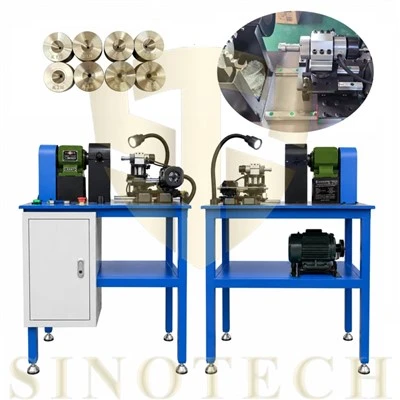
If you’re in the market for a new nail processing line, or you’re looking to upgrade your current one to cut down on defects, we can walk you through exactly what your shop needs. We don’t do pushy sales stuff—we just give you the facts, like we did with that Ohio customer. Shoot us a line when you’re ready to chat.
Nail Processing Line References:
- International Organization for Standardization. "Fasteners – Nails, Spikes and Studs." ISO 1580:2019.
- Machinery Lubrication Magazine. "Preventive Maintenance for Industrial Processing Lines." 2022.
- American Society of Mechanical Engineers. "Quality Control in Small-Scale Metal Fabrication." 2021.
- Fastener Technology Association. "Common Defects in Wire Nails and Mitigation Strategies." 2020.
Sinotech Fasteners Industry Co., Ltd.
With abundant experience, we are one of the most professional nail processing line manufacturers in China. Please feel free to buy customized nail processing line at competitive price from our factory. Welcome to contact us for quotation.
Address: No. 7, North of Bantang Avenue, Huashan Industrial Park, Chaohu Economic Development Zone, Hefei City, Anhui Province, China
E-mail: ryan@sinotechfasteners.com
WebSite: https://www.sinotech-fasteners.com/
