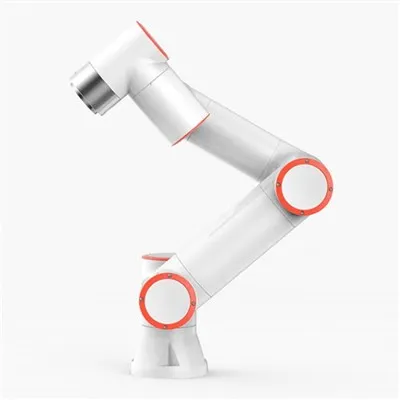
Hey there! I’m part of a collaborative robot (cobot) supplier team, and I’ve seen firsthand how these amazing machines are changing the game in various industries. But one question that often comes up is, "How can we enhance the adaptability of a collaborative robot?" Well, let’s dive right in and explore some practical ways to make our cobots even more versatile. Collaborative Robot
Understanding the Basics of Adaptability
First off, we need to understand what adaptability means in the context of cobots. Adaptability refers to a cobot’s ability to adjust to different tasks, environments, and user requirements. A highly adaptable cobot can easily switch between different operations, work alongside human workers in various settings, and be quickly reprogrammed for new tasks.
One of the key factors that affect a cobot’s adaptability is its hardware design. For example, a cobot with a modular design allows for easy replacement of end – effectors, such as grippers or welding tools. This means that it can be quickly reconfigured for different tasks. We’ve been focusing on developing cobots with modular hardware, so that our customers can easily swap out parts and customize the robot for their specific needs.
Software and Programming
Software plays a huge role in enhancing a cobot’s adaptability. Traditional programming methods can be time – consuming and require a high level of technical expertise. That’s why we’re big fans of intuitive programming interfaces. These interfaces allow operators with little to no programming experience to teach the cobot new tasks.
For instance, some of our cobots come with drag – and – drop programming features. You can simply move the cobot’s arm to the desired positions and the software records the movements. Then, you can easily repeat those movements for the same task or modify them for a different one. This makes it super easy for users to adapt the cobot to new jobs on the fly.
Another aspect of software is the use of machine learning algorithms. Machine learning can help the cobot learn from its experiences and adapt to changes in the environment. For example, if a cobot is used for picking and placing objects, machine learning can help it recognize different shapes, sizes, and colors of objects. This way, it can handle a wider variety of items without the need for extensive reprogramming.
Sensor Technology
Sensors are like the cobot’s eyes and ears. They allow the cobot to perceive its surroundings and make adjustments accordingly. There are several types of sensors that can enhance a cobot’s adaptability.
Force sensors are particularly important. They can detect the amount of force the cobot is applying during a task. This is crucial for tasks like assembly, where the cobot needs to apply just the right amount of force to avoid damaging the parts. For example, when inserting a small component into a larger one, the force sensor can ensure that the cobot doesn’t push too hard.
Vision sensors are also a game – changer. They enable the cobot to see and identify objects in its environment. With vision sensors, a cobot can pick up objects from different locations, even if they are randomly placed. This is extremely useful in applications like warehouse picking, where the cobot needs to find and retrieve items from a cluttered shelf.
Training and Support
Enhancing a cobot’s adaptability also involves providing proper training and support to the users. We offer comprehensive training programs for our customers, which cover everything from basic operation to advanced programming.
During the training, we teach users how to take full advantage of the cobot’s features, such as its modular design and intuitive programming interface. We also provide ongoing support, so that if users run into any problems or need to adapt the cobot to a new task, they can reach out to our team for help.
Environmental Adaptability
Cobots need to be able to work in different environments. Some industries, like food processing or pharmaceuticals, have strict hygiene requirements. Our cobots are designed with materials that are easy to clean and sanitize, so they can meet these high – standard environmental needs.
In addition, cobots may need to operate in different temperature and humidity conditions. We’ve engineered our cobots to be robust and reliable in a wide range of environmental factors. This ensures that they can adapt to various industrial settings without any issues.
Safety Features for Adaptability
Safety is a top priority when it comes to cobots, especially when they are working alongside human workers. Good safety features not only protect the workers but also contribute to the cobot’s adaptability.
For example, our cobots are equipped with collision detection sensors. These sensors can detect when the cobot comes into contact with an object or a human. When a collision is detected, the cobot can immediately stop or slow down its movement. This allows the cobot to work safely in dynamic environments where there may be unexpected obstacles.
Customization and Integration
Every customer has unique requirements, and that’s why customization is so important. We work closely with our customers to understand their specific needs and customize our cobots accordingly.
We also focus on integration with other systems. A cobot that can be easily integrated with existing production lines, conveyor belts, or other equipment is more adaptable. For example, we can integrate our cobots with a factory’s inventory management system. This way, the cobot can automatically pick and place items based on the inventory data, making the production process more efficient.
Conclusion

In conclusion, enhancing the adaptability of a collaborative robot involves a combination of hardware design, software programming, sensor technology, training, environmental considerations, safety features, and customization. By focusing on these aspects, we can make our cobots more versatile and better able to meet the diverse needs of our customers.
Industrial Robot If you’re interested in learning more about how our collaborative robots can enhance your production processes or if you want to discuss a specific application, we’d love to hear from you. Just reach out to us, and we’ll be happy to have a chat about your requirements and how our cobots can be adapted to your needs.
References
- "Robotics: Modular Design and Adaptability" – Journal of Industrial Robotics
- "Intuitive Programming Interfaces for Collaborative Robots" – Robotics and Automation Magazine
- "Sensor Technology in Collaborative Robots" – IEEE Transactions on Robotics
- "Machine Learning for Robotic Adaptability" – Artificial Intelligence in Robotics Conference Proceedings
Xinweilai Intelligent Technology (Shandong) Co., Ltd.
As one of the most professional collaborative robot manufacturers and suppliers in China, we’re featured by quality products and good service. Please rest assured to wholesale bulk customized collaborative robot from our factory. For pricelist and quotation, contact us now.
Address: Jinghua Road, Economic and Technical Development Zone, Dezhou City, Shandong Province
E-mail: liujiqing@xinweilaiznkj.com
WebSite: https://www.xinweilaiznkj.com/
