When it comes to accurately measuring fluid flow in various channels, radar flow meters have emerged as a reliable and efficient solution. However, the cross-sectional shape of the channel can significantly influence the performance and accuracy of these meters. As a supplier of radar flow meters, I have witnessed firsthand the impact of channel geometry on measurement results. In this blog, I will delve into how the cross-sectional shape of the channel affects the measurement of a radar flow meter and why it’s crucial to consider this factor when installing and using these devices. Radar Flow Meter
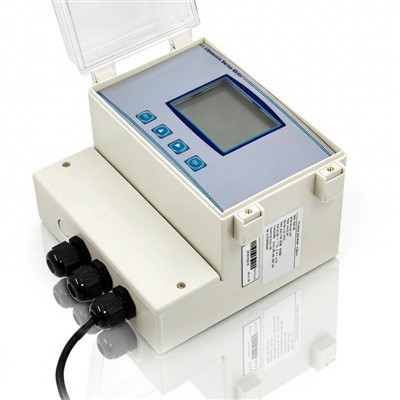
1. Basic Principles of Radar Flow Meters
Before discussing the influence of channel cross – sectional shape, it’s necessary to understand the basic operation of radar flow meters. These meters typically work on the principle of transmitting radar waves towards the fluid surface. The waves are reflected back from the surface, and by analyzing the frequency shift (Doppler effect) or the time of flight of the reflected waves, the velocity of the fluid can be determined. Once the velocity is known, and with knowledge of the cross – sectional area of the channel, the flow rate can be calculated using the formula Q = A×V, where Q is the flow rate, A is the cross – sectional area, and V is the average fluid velocity.
2. Rectangular Channels
Rectangular channels are one of the most common types of channels in industrial and municipal applications. They offer some advantages for radar flow meter measurement. First, the parallel and well – defined sides of a rectangular channel make it relatively easy to calculate the cross – sectional area. The formula for the cross – sectional area of a rectangular channel is A = W×H, where W is the width and H is the depth of the fluid. When using a radar flow meter in a rectangular channel, the meter can accurately detect the fluid level, and as long as the width of the channel remains constant, the cross – sectional area can be determined precisely.
However, there are also some challenges. In rectangular channels, the fluid flow pattern may not be uniform across the cross – section. There can be boundary layer effects near the walls and corners of the channel, where the fluid velocity is lower compared to the center. This non – uniform flow can lead to inaccurate velocity measurements if the radar flow meter does not take this into account. Some advanced radar flow meters use multiple sensors or algorithms to average the velocity measurements over the cross – section, reducing the impact of non – uniform flow.
3. Circular Channels
Circular channels, such as pipes, are widely used in water supply, sewage systems, and industrial pipelines. Measuring flow in circular channels with a radar flow meter has its own characteristics. The cross – sectional area of a circular channel is calculated by the formula A = π×(D/2)^2, where D is the diameter of the pipe. When the pipe is full, the calculation is straightforward. But in partially filled pipes, things get more complicated.
The shape of the fluid cross – section in a partially filled circular pipe is a segment of a circle. The area of this segment needs to be calculated based on the fluid level. Radar flow meters need to accurately measure the fluid level to determine this area correctly. Additionally, the flow in a circular pipe is also non – uniform, with a higher velocity at the center and lower velocities near the pipe walls. The curvature of the pipe can also affect the reflection of radar waves. The radar waves may be scattered or refracted differently compared to a flat surface, potentially leading to errors in velocity measurement.
4. Trapezoidal Channels
Trapezoidal channels are often used in open – channel flow applications, such as irrigation canals and drainage ditches. The cross – sectional area of a trapezoidal channel is calculated by A=(b + B)×h/2, where b is the bottom width, B is the top width, and h is the depth of the fluid. Trapezoidal channels present unique challenges for radar flow meter measurement.
The sloping sides of the trapezoid can cause the radar waves to be reflected at different angles, which may affect the accuracy of the velocity measurement. Also, the flow characteristics in trapezoidal channels are complex. The velocity distribution can vary significantly depending on the slope of the sides and the flow rate. The boundary layer effects near the sloping sides are different from those in rectangular or circular channels. Radar flow meters need to be calibrated carefully to account for these variations and ensure accurate flow measurement.
5. Irregularly Shaped Channels
In some real – world scenarios, channels may have irregular cross – sectional shapes. These could be natural waterways, such as rivers or streams, or industrial channels with complex geometries. Measuring flow in these channels is extremely challenging.
The irregular shape makes it difficult to calculate the cross – sectional area accurately. The flow pattern in irregular channels is highly non – uniform, with eddies, vortices, and different flow directions in different parts of the cross – section. Radar flow meters may face problems in detecting the actual fluid velocity and level. Special techniques, such as mapping the channel geometry using surveying equipment and using advanced signal – processing algorithms, are often required to achieve acceptable measurement accuracy.
6. Implications for Radar Flow Meter Selection and Installation
The cross – sectional shape of the channel has significant implications for the selection and installation of radar flow meters. For simple channels like rectangular pipes, a standard radar flow meter may be sufficient. However, for circular pipes, especially those that operate in partially filled conditions, a meter with advanced level – sensing capabilities and algorithms for non – uniform flow correction is recommended.
In the case of trapezoidal or irregularly shaped channels, more sophisticated radar flow meters with the ability to adapt to complex geometries and non – uniform flow patterns are necessary. The installation position of the radar flow meter also matters. It should be placed in a location where it can get a clear view of the fluid surface and where the flow is as representative as possible of the overall flow in the channel.
7. Our Solutions as a Radar Flow Meter Supplier
As a supplier of radar flow meters, we understand the importance of channel cross – sectional shape in flow measurement. We offer a wide range of radar flow meters that can be customized to different channel geometries. Our engineering team has in – depth knowledge of fluid dynamics and radar technology, allowing us to provide accurate solutions for various applications.
For rectangular channels, our meters are equipped with advanced signal – processing algorithms to compensate for non – uniform flow. In circular channels, we use high – precision level sensors and algorithms to accurately calculate the cross – sectional area, even in partially filled conditions. When it comes to trapezoidal and irregularly shaped channels, our research and development team has developed innovative solutions that can adapt to complex geometries and flow patterns.
8. Conclusion and Call to Action

In conclusion, the cross – sectional shape of the channel has a profound impact on the measurement of a radar flow meter. Different channel shapes present different challenges and require different measurement techniques and equipment. As a radar flow meter supplier, we are committed to providing the best solutions to our customers.
Pressure & Temperature Transmitter If you are facing challenges in accurately measuring flow in your channels, whether they are rectangular, circular, trapezoidal, or irregularly shaped, we are here to help. Our experienced team can analyze your specific situation, recommend the most suitable radar flow meter, and provide installation and calibration support. Contact us to initiate a purchase discussion and let us work together to achieve accurate and reliable flow measurement.
References
- International Organization for Standardization. (2007). ISO 748:2007, Measurement of liquid flow in open channels – Trapezoidal profiling flumes.
- American Society of Mechanical Engineers. (1983). ASME MFC – 13M – 1983 (R2005), Measurement of Fluid Flow in Closed Conduits using Tracer Methods.
- Chanson, H. (2004). The hydraulics of open channel flow: an introduction. Butterworth – Heinemann.
Dalian Yheng Technology Co., Ltd.
Dalian Yheng Technology Co., Ltd. is one of the leading radar flow meter manufacturers and suppliers in China, also supports customized service. We warmly welcome you to buy high quality radar flow meter in stock here from our factory. Contact us for more details.
Address: F1605, NO.10 Huoju road, High-tech Industrial Zone, Dalian, China
E-mail: admin@dlyheng.com
WebSite: https://www.yhengphmeter.com/
