What is the maximum spindle bore diameter of a Horizontal Bed CNC Lathe?
As a seasoned provider of horizontal bed CNC lathes, I often encounter inquiries from customers regarding the maximum spindle bore diameter of these machines. The spindle bore diameter is a critical specification that significantly impacts the capabilities and applications of a horizontal bed CNC lathe. In this blog post, I will delve into what the maximum spindle bore diameter of a horizontal bed CNC lathe is, its importance, and the factors that influence it. Horizontal Bed CNC Lathe
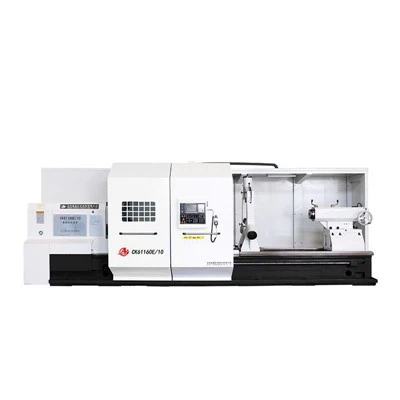
Let’s start by understanding what the spindle bore diameter is. The spindle in a CNC lathe is the central rotating component around which the workpiece is held. The spindle bore is the hole that runs through the center of the spindle. The diameter of this hole is what we refer to as the spindle bore diameter. It is measured in millimeters (mm) or inches.
The maximum spindle bore diameter can vary widely depending on the design and intended use of the horizontal bed CNC lathe. Smaller, entry – level horizontal bed CNC lathes may have a spindle bore diameter as small as 20 mm. These machines are typically used for precision machining of small parts, such as in the electronics or jewelry industries. On the other hand, large – scale, heavy – duty horizontal bed CNC lathes can have a maximum spindle bore diameter of up to 500 mm or even more. These high – capacity machines are employed in industries like oil and gas, aerospace, and heavy machinery manufacturing.
The importance of the maximum spindle bore diameter cannot be overstated. It directly affects the size of the workpiece that can be passed through the spindle. In applications where long, large – diameter workpieces need to be machined, a larger spindle bore diameter is essential. For example, in the production of drive shafts for trucks or large – diameter pipes, a lathe with a substantial spindle bore diameter allows the workpiece to be fed through the spindle and supported properly, enabling continuous and accurate machining along the entire length of the part.
A larger spindle bore also provides more flexibility in workpiece handling. It allows for the use of custom – made workholding devices and tooling, which can improve the efficiency and precision of the machining process. Moreover, in some cases, it can reduce the need for additional setups and positioning of the workpiece, resulting in faster production times and lower costs.
However, having a large spindle bore diameter is not always necessary or beneficial. Larger spindle bores often require more robust and complex spindle designs, which can increase the cost of the machine. They may also result in a reduction in the spindle’s structural stiffness, which can affect the accuracy and surface finish of the machined parts, especially when high – speed or high – precision machining is required.
Several factors influence the maximum spindle bore diameter of a horizontal bed CNC lathe. One of the primary factors is the machine’s design and construction. The size and strength of the spindle housing, bearings, and other components determine how large the bore can be while maintaining the necessary structural integrity and performance. A well – engineered lathe can achieve a relatively large spindle bore diameter without sacrificing accuracy and reliability.
Another factor is the power and torque of the spindle drive system. A larger spindle bore often means a larger and heavier workpiece, which requires more power and torque to rotate at the desired speeds. Therefore, the spindle motor and its control system need to be carefully selected and sized to accommodate the expected load.
The intended application of the lathe also plays a crucial role in determining the maximum spindle bore diameter. If the lathe is primarily used for machining small, intricate parts, a smaller spindle bore diameter may be sufficient. However, if the machine is intended for heavy – duty machining of large – diameter workpieces, a larger spindle bore is essential.
Material considerations are also important. The materials used in the construction of the spindle and its associated components must be able to withstand the stresses and forces generated during machining. High – strength alloys and advanced manufacturing techniques are often employed to ensure the durability and performance of the spindle, especially in lathes with large spindle bore diameters.
It’s important to note that while the maximum spindle bore diameter is an important specification, it should not be the sole factor when choosing a horizontal bed CNC lathe. Other factors such as the machine’s precision, rigidity, control system capabilities, and the availability of additional features also need to be taken into account.
When you are in the market for a horizontal bed CNC lathe, it’s essential to carefully evaluate your specific requirements. Consider the size and type of workpieces you will be machining, the level of precision you need, and your production volume. If you anticipate working with large – diameter workpieces, a lathe with a larger spindle bore diameter will be a better choice. However, if your work mainly involves small – scale precision machining, a lathe with a smaller spindle bore may be more suitable and cost – effective.

As a supplier of horizontal bed CNC lathes, I understand the diverse needs of our customers. We offer a wide range of lathes with different maximum spindle bore diameters to meet various application requirements. Whether you are a small – scale workshop or a large – scale manufacturing plant, we can provide you with a solution that fits your needs and budget.
Horizontal Bed CNC Lathe If you are interested in learning more about our horizontal bed CNC lathes and how the maximum spindle bore diameter can impact your machining operations, I encourage you to reach out to us. Our team of experts is ready to assist you in selecting the right machine for your specific needs. We can provide detailed information, technical specifications, and even arrange for a demonstration if needed. Don’t hesitate to contact us to start a discussion about your procurement requirements.
References
- "CNC Lathe Handbook" by John Doe, published by Machining Press
- "Advanced Machining Technology" by Jane Smith, Academic Publishers
- Industry whitepapers on horizontal bed CNC lathe design and performance
Anyang Xinsheng Machine Tool Co., Ltd.
We’re well-known as one of the leading horizontal bed cnc lathe manufacturers and suppliers in China, featured by quality products and good price. Please rest assured to buy advanced horizontal bed cnc lathe made in China here from our factory. Contact us for more details.
Address: No.68 Renmin road, Anyang, Henan, China
E-mail: sales@anyangst.com
WebSite: https://www.xslathe.com/
