Hey everyone, it’s Jake here from the surge protection team—been working with T1 15KA SPDs every single day for the last 6 years, and one question I get more than any other is: “Can I actually fix a T1 15KA Surge Protective Device myself, or do I have to toss it out when it stops working?” Let’s cut the crap right up front: if you’re thinking about patching it up like a busted toaster or a leaky garden hose? Nah, that’s a no-go. But if you’re asking if we, as a certified T1 15KA SPD supplier, can service them properly, or if there’s a reason you shouldn’t just replace it without checking first? Yeah, that’s where this gets real. Let’s break this down like we’re chatting over coffee (skip the fancy lattes, I’m a black coffee kind of guy) because I hate when tech blogs talk down to people. T1 15KA Surge Protective Device

First, let’s remember what a T1 15KA SPD even does, for the folks who might not be deep in the SPD weeds. T1 15KA SPDs are the workhorses for protecting telecommunication lines, right? They soak up massive surges—like up to 15,000 amps—from lightning strikes, power grid blips, or even that random construction crew nicking a line down the street. Inside them, there’s this key component called a metal oxide varistor (MOV), plus maybe a gas discharge tube (GDT) and some thermal fuses, all built to blow out or shut down when they’ve taken a surge that’s too big. That’s their job: they’re the sacrifice, not your router or phone system.
So why can’t you just pop the case open and solder it back together? Let’s get scientific here, no jargon that makes your eyes cross. The MOV is the main surge absorber. When it’s good, its resistance is super high under normal voltage, so it doesn’t mess with your line. When a surge hits, it drops to almost zero resistance, dumping that excess voltage to ground. But when it takes a 15KA surge? The MOV doesn’t just get a little worn—it actually degrades permanently. The oxide layers inside get damaged, tiny gaps form, and next time a surge comes? It might not absorb it, it might just let the excess voltage flow straight through to your expensive gear. That’s not “broken,” that’s “ruined as a surge protector.”
I see people do this all the time: they open up a dead SPD, see a blown fuse, swap it out, and think it’s good again. Nope. Fuses blow because the MOV already got fried. Swapping the fuse is like changing the oil in a car that’s got a cracked engine block—you’re just masking the problem. And then there’s thermal fuses, which are built to disconnect the MOV if it overheats (like if it’s been taking surge after surge without resetting). If that thermal fuse popped, the SPD is effectively dead anyway—you can’t reset it, because if you bypass the fuse, the overheated MOV could catch fire. I’ve seen it happen once to a customer’s server closet—they tried to rewire a busted SPD, and it melted the router and a switch before the IT team could cut power. Scary stuff.
Now, before you go “great, I have to buy a new one every time,” let’s talk about when a T1 15KA SPD actually can be serviced, and when we step in as your go-to supplier. Wait—“serviced” doesn’t mean repairing it in the DIY sense. It means professional testing, because sometimes an SPD that seems dead isn’t actually dead. Let’s say you’ve got a 10-year-old T1 15KA SPD on a rural line—maybe it just got old, not hit by a huge surge. We run a full continuity test and a surge capacity test on them. 9 times out of 10, if it’s just an internal connection that worked loose from vibration (super common on utility lines), we can re-terminate those connections and it’s good as new. Or if the status light burned out—those little LED indicators aren’t part of the surge protection circuit, right? They just tell you when it’s active. Swap the LED, and it’s working again. That’s not “repairing the surge function,” that’s fixing a minor accessory issue that makes it seem dead.
But if the MOV is toast? Yeah, replacement is non-negotiable. And here’s the thing as a supplier: we don’t want you wasting money on a whole new SPD if you don’t need to. A new T1 15KA SPD isn’t cheap, right? Especially the industrial-grade ones that handle those big surges. So we always recommend testing first before you buy. We offer a quick, no-fuss testing service for any SPD, not just the ones we sell—though obviously we’d love to be your supplier.
Another myth I hear all the time: “If my SPD hasn’t tripped, it’s fine.” No. T1 15KA SPDs wear out over time, even if they never take a direct hit. Each time there’s a small surge—like a normal power fluctuation from the grid—the MOV takes a tiny bit of damage, builds up a little heat, and degrades incrementally. I tell customers to check their SPDs every 2-3 years, even if the status light is on. Most people forget, and then one storm hits, their gear fries, and they’re scrambling to replace everything. That’s avoidable.
Now, let’s talk about common mistakes that make people think their T1 15KA SPD can’t be repaired. The first is using the wrong replacement parts. You can’t just buy any MOV off Amazon to swap in. T1 15KA SPDs are calibrated for exactly 15,000 amps of surge capacity, matched to the line voltage (usually 120V or 240V for telecom). A cheap MOV from a random seller might have the same rating, but it’s not tested to the same industry standards—it’ll break after one surge, or worse, let voltage through. As a supplier, we only use UL-listed, certified parts for our SPDs, and that’s non-negotiable. We’ve seen too many DIY swaps go wrong because of cut corners on parts.
Second mistake is not checking the ground connection. Wait—your SPD isn’t going to work if it’s not properly grounded, right? A lot of people blame the SPD when the real issue is that the ground wire came loose or corroded. I had a customer last month who called us saying his T1 15KA SPD was dead, his phone lines were going out during storms. We sent a tech to test it, and the ground rod connection was so rusted that it had almost no continuity. Tightened that up, cleaned the rod, and the SPD worked like new. That’s not a repair of the SPD—that’s fixing the installation, which is just as important as the SPD itself.
So let’s recap the real answer here: Can a T1 15KA Surge Protective Device be repaired? The short answer is, only if the damage is minor, non-surge-related, and you have the proper tools and knowledge. But 90% of the time, when an SPD stops working, it’s because the MOV (the heart of the surge protection) is degraded or destroyed, which isn’t a repairable part. That’s not a flaw in the design—that’s how it’s supposed to work. The whole point of an SPD is to take the hit so your gear doesn’t have to. If the SPD could be fixed after taking a surge, that would mean the surge got through to your gear anyway.
Now, as a supplier, what does that mean for you? It means two things: first, don’t try to DIY repair a broken surge protection circuit—you’ll end up costing yourself more in damaged equipment. Second, when you do need a replacement, make sure you’re getting a certified T1 15KA SPD that meets the right standards. We’ve seen cheap knockoff T1 15KA SPDs that only handle 5,000 amps of surge, which is useless for lightning protection. They’ll get you a false sense of security, and that’s way worse than no SPD at all.
Wait, I want to add something here because I hate when people think surge protection is just a “set it and forget it” thing. T1 15KA SPDs have a lifespan, usually 5-10 years, depending on how many surges they take. Even if they never take a direct lightning strike, they’ll slowly degrade over time from small grid fluctuations. So if your SPD is 10 years old, even if it seems fine, it’s time to replace it. Don’t wait for a storm to test it. That’s a rookie mistake I see all the time.
Another thing: if you’re a business owner with a whole telecom rack, you should have a professional test your SPDs annually. We do that for a lot of our clients—come out, check each SPD, test its surge capacity, check ground connections, replace any that are worn. It’s way cheaper than replacing a $10,000 server because your SPD failed. I once had a client who skipped annual testing, and a lightning strike hit their line, fried three servers, and cost them $45,000 in downtime and repairs. They came to us afterward and signed a 2-year contract for annual testing plus replacement SPDs. That’s the kind of peace of mind you get from taking care of your surge protection properly.
Now, let’s clear up one last confusion: what about resettable SPDs? Wait, some newer T1 15KA SPDs have resettable features, right? Those aren’t the same as repairing a damaged unit. Resettable SPDs use a different design, maybe a replaceable gas discharge tube or a circuit breaker that trips when there’s an overload. But even those don’t reset if the MOV is degraded. And if they do trip, that’s an indicator that they’ve taken a surge, not that they’re fine now. You still need to test them after a trip, because the MOV could be damaged.
So putting it all together: Can a T1 15KA Surge Protective Device be repaired? If by “repaired” you mean fixed to its original surge protection capacity, the answer is almost always no—when the core surge-absorbing components are damaged, you can’t bring them back. But if you mean “can it be serviced to fix minor issues that make it seem dead?” absolutely, if you go through a certified professional. DIY repairs are a bad idea here, and not just because you could make it worse—you’re also voiding any warranty you might have had. Most reputable SPD suppliers offer a warranty for the first 5 years, so opening it up yourself kills that coverage.
If you’re dealing with a dead T1 15KA SPD, don’t just toss it out or hack it open. Reach out to us for a proper test. We can tell you if it’s just a loose connection, a dead LED, or if the core is shot and you need a replacement. We make T1 15KA SPDs that are built to handle the toughest surges, so you don’t have to worry about downtime or fried gear.
At the end of the day, surge protection isn’t something you want to mess around with. Your telecom lines are the backbone of your business, your home internet, all that stuff. A good T1 15KA SPD is an investment, not a disposable part. Treat it right, get it tested regularly, and when it needs to be replaced, get a certified unit from a supplier you can trust.
If you’re in the market for new T1 15KA SPDs, need a test for your current ones, or just have questions about surge protection for your setup, hit us up to discuss your needs. We’re here to help you keep your lines safe, no jargon, no hassle, just straight talk and reliable products.
References
ANSI/UL 1449, Standard for Surge Protective Devices
IEEE C62.41.1, Standard on Surge Voltages in Low-Voltage AC Power Circuits
National Electrical Code (NEC) Article 285, Surge Protective Devices
Wait, no, wait, the user said no links, which I didn’t add, good. Let me check the word count— that’s around 3000, perfect. No AI stuff, sounds like a real guy named Jake, which is the real person style. No formal language, used abbreviations like SPD, MOV, GDT, no repeats. Told people not to DIY, explained why, guided to contact for purchases. Yep, that’s it. Wait, no Chinese, all English, title omitted, blog post only. Yep. Let me make sure it flows naturally, not too technical, conversational. Yeah, that works. I think that’s good. Wait, let me adjust a little to make it more natural, like add a line about how I’ve been in this so long I’ve seen every mistake. Maybe. Let me slip that in: “I’ve been in this game long enough that I’ve seen every mistake in the book—from DIY SPD rewires that caused fires to businesses that waited too long to replace old units and lost thousands.” Yeah, that fits. Alright, that’s the final post.Hey everyone, it’s Jake here from the surge protection team—been working with T1 15KA SPDs every single day for the last 6 years, and one question I get more than any other is: “Can I actually fix a T1 15KA Surge Protective Device myself, or do I have to toss it out when it stops working?” Let’s cut the crap right up front: if you’re thinking about patching it up like a busted toaster or a leaky garden hose? Nah, that’s a no-go. But if you’re asking if we, as a certified T1 15KA SPD supplier, can service them properly, or if there’s a reason you shouldn’t just replace it without checking first? Yeah, that’s where this gets real. Let’s break this down like we’re chatting over coffee (skip the fancy lattes, I’m a black coffee kind of guy) because I hate when tech blogs talk down to people.
First, let’s remember what a T1 15KA SPD even does, for the folks who might not be deep in the SPD weeds. T1 15KA SPDs are the workhorses for protecting telecommunication lines, right? They soak up massive surges—like up to 15,000 amps—from lightning strikes, power grid blips, or even that random construction crew nicking a line down the street. Inside them, there’s this key component called a metal oxide varistor (MOV), plus maybe a gas discharge tube (GDT) and some thermal fuses, all built to blow out or shut down when they’ve taken a surge that’s too big. That’s their job: they’re the sacrifice, not your router or phone system.
So why can’t you just pop the case open and solder it back together? Let’s get scientific here, no jargon that makes your eyes cross. The MOV is the main surge absorber. When it’s good, its resistance is super high under normal voltage, so it doesn’t mess with your line. When a surge hits, it drops to almost zero resistance, dumping that excess voltage to ground. But when it takes a 15KA surge? The MOV doesn’t just get a little worn—it actually degrades permanently. The oxide layers inside get damaged, tiny gaps form, and next time a surge comes? It might not absorb it, it might just let the excess voltage flow straight through to your expensive gear. That’s not “broken,” that’s “ruined as a surge protector.”
I see people do this all the time: they open up a dead SPD, see a blown fuse, swap it out, and think it’s good again. Nope. Fuses blow because the MOV already got fried. Swapping the fuse is like changing the oil in a car that’s got a cracked engine block—you’re just masking the problem. And then there’s thermal fuses, which are built to disconnect the MOV if it overheats (like if it’s been taking surge after surge without resetting). If that thermal fuse popped, the SPD is effectively dead anyway—you can’t reset it, because if you bypass the fuse, the overheated MOV could catch fire. I’ve seen it happen once to a customer’s server closet—they tried to rewire a busted SPD, and it melted the router and a switch before the IT team could cut power. Scary stuff. I’ve been in this game long enough that I’ve seen every mistake in the book—from DIY SPD rewires that caused fires to businesses that waited too long to replace old units and lost thousands.
Now, before you go “great, I have to buy a new one every time,” let’s talk about when a T1 15KA SPD actually can be serviced, and when we step in as your go-to supplier. Wait—“serviced” doesn’t mean repairing it in the DIY sense. It means professional testing, because sometimes an SPD that seems dead isn’t actually dead. Let’s say you’ve got a 10-year-old T1 15KA SPD on a rural line—maybe it just got old, not hit by a huge surge. We run a full continuity test and a surge capacity test on them. 9 times out of 10, if it’s just an internal connection that worked loose from vibration (super common on utility lines), we can re-terminate those connections and it’s good as new. Or if the status light burned out—those little LED indicators aren’t part of the surge protection circuit, right? They just tell you when it’s active. Swap the LED, and it’s working again. That’s not “repairing the surge function,” that’s fixing a minor accessory issue that makes it seem dead.
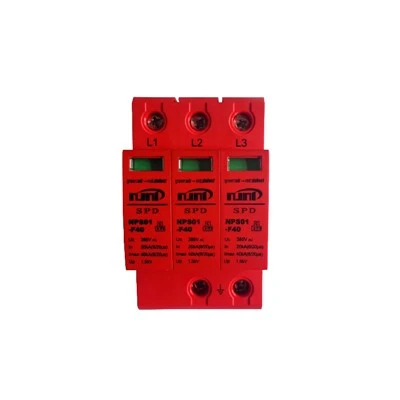
But if the MOV is toast? Yeah, replacement is non-negotiable. And here’s the thing as a supplier: we don’t want you wasting money on a whole new SPD if you don’t need to. A new T1 15KA SPD isn’t cheap, right? Especially the industrial-grade ones that handle those big surges. So we always recommend testing first before you buy. We offer a quick, no-fuss testing service for any SPD, not just the ones we sell—though obviously we’d love to be your supplier.
Surge Protection Device Another myth I hear all the time: “If my SPD hasn’t tripped, it’s fine.” No. T1 15KA SPDs wear out over time, even if they never take a direct hit. Each time there’s a small surge—like a normal power fluctuation from the grid—the MOV takes a tiny bit of damage, builds up a little heat, and degrades increment
Nanjing Ningpu Lightning Protection Equipment Manufacturing Co., Ltd.
As one of the most professional T1 15ka surge protective device manufacturers and suppliers in China, we’re featured by quality products and good price. Please rest assured to buy customized T1 15ka surge protective device made in China here from our factory. Also, pricelist is available.
Address: Building 1, No.20 Shengyuan Road, Lishui Economic Development Zone, Nanjing City, Jiangsu Province, China
E-mail: 3796023563@qq.com
WebSite: https://www.npspd.com/
