If you’ve ever walked a solar installation site—trench lines stretching across a field, pre-poured concrete pads waiting for racking, or rooftop frames aligned perfectly for maximum sun exposure—you’ve probably spotted a solar pile driver at work. For years, these pieces of equipment were seen as heavy, complex, reserved only for crews with specialized heavy machinery training. But over the last decade, as we’ve supplied solar pile drivers to thousands of installers across North America, Latin America, and parts of Europe, one question keeps popping up: How easy is it actually to operate one? As a supplier who trains every customer before their first day on site, I’m here to break down the truth—not the marketing fluff, not the outdated stories about loud, complicated rigs, but the real, on-the-ground answer. Solar Pile Driver
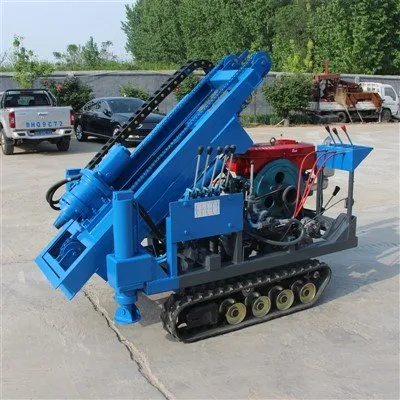
Let’s start with the core: Modern solar pile drivers are not your grandfather’s construction equipment. Back in the 2000s, most were repurposed from general construction pile drivers—big, diesel-powered, with dozens of buttons, hydraulic lines, and a learning curve that took weeks. That was fine for bridge building or skyscrapers, but solar installers don’t need that level of brute force or complexity. Our team designed our flagship models specifically for solar applications, and that shift changed everything. Today, the average install crew member—someone who’s operated a skid steer, a small excavator, or even just basic power tools—can be comfortable on a solar pile driver in a single day. Let’s get specific about why that’s possible.
First, the user interface is built for people, not industrial engineers. Old drivers had console panels covered in tiny, labeled dials and unmarked buttons that meant nothing to someone who didn’t work with heavy machinery daily. Our drivers have a 7-inch, color touchscreen mounted right at eye level, with large, tapable icons that follow standard equipment logic. Want to adjust the hammer force? Tap a “Force” slider. Need to set the depth of the pile—critical for solar, because undersized piles lead to racking failure, and oversized piles waste time and material? Tap “Depth Control,” input your target number in inches or millimeters, and the driver stops automatically when it hits that mark. There’s no guesswork, no mixing up hydraulic pressure settings, no hidden submenus. The screen also has a built-in safety checklist that pops up before you start: Have you checked the ground for underground utilities? Is the pile properly aligned? Did you set the emergency stop? It even has a real-time depth log, which is saved automatically to a USB drive—no more handwritten notes that get lost, no disputes over whether a pile was driven to spec.
But what about the physical operation? A common misconception is that you need to be a seasoned operator to maneuver the driver, especially on uneven terrain like solar farms or sloped rooftops. Most modern solar pile drivers are compact—our smallest model is 12 feet long, weighs under 10,000 pounds, and has a zero-turn radius. That means you can spin it in place on a 15-foot-wide path, no need for extra space to turn around, which is a game-changer for narrow, densely packed solar sites. The joysticks are responsive, not overly sensitive—we designed them so a crew member who’s never used a large piece of equipment can move the pile into position smoothly, no jerky movements that bend piles or damage the ground. For rooftop applications, we also have track-mounted models that weigh just 15,000 pounds, with load sensors that distribute weight evenly so you don’t have to reinforce the roof deck. Even on uneven ground, the driver’s self-leveling system adjusts the frame in 10 seconds, so you don’t have to block up the rig or do tedious manual leveling before driving a pile. That’s a huge time-saver—we’ve had installers cut their pre-drive prep time by 70% with our self-leveling feature.
Wait, but what about training? Can someone really learn this in a day? Let’s be honest—no piece of equipment is completely intuitive, and we don’t expect someone to be a pro after a 2-hour video. But our training process is built to fit the needs of real crews, not just check a box for OSHA. When a customer takes delivery of our drivers, we send a certified field trainer to their site for a full day of hands-on training. The first half is classroom, but not the boring kind—we go over the touchscreen, safety protocols, common mistakes (like driving a pile too fast, which can bend the tip), and troubleshooting small issues, like unclogging a pile guide if a piece of debris gets stuck. The second half is practice, right on the installer’s own site, using their own piles and their own terrain. We’ve had crew members who’d only ever used a lawnmower or a pressure washer on their first day, and by the end of the training, they were driving 10 piles without asking a single question. That said, we always recommend a second half-day of on-site support if the crew is working on a large project, just to work through any specific site challenges—like rocky soil, which is more common in parts of the Southwest US, or soft, muddy ground in places like Brazil. We also have a 24/7 support line, with technicians who know our drivers inside and out, so if someone hits a small snag mid-project, they don’t have to wait days for help.
But here’s the part most suppliers don’t talk about: the operational limits, and who it’s not for. Solar pile drivers are not universal equipment. If you’re driving 100-foot concrete piles for a bridge, our drivers won’t cut it—they’re designed for steel helical piles or galvanized steel pipe piles that are 2 to 10 feet long, which is exactly what solar projects use for ground mounts, carports, and small commercial arrays. That specialization is why they’re so easy to operate. If you try to use a general construction driver for solar, you’ll be fighting extra power, extra controls, and extra weight that you don’t need, which makes the whole process harder. But for the vast majority of solar installers—residential, commercial, utility-scale—our drivers are purpose-built for the job, which eliminates all the unnecessary complexity.
Another factor that makes operation easy is automation. Today’s solar pile drivers have multiple automated features that take the guesswork out of the most critical part of the job: getting the pile to the exact specs. Automatic depth control, as I mentioned earlier, is standard on all our models, and it’s calibrated to work with every standard pile size, no extra programming. We also have alignment sensors that use LiDAR to line up the pile with the marked racking path—you just drive the rig within 2 feet of the mark, and the sensor beeps when it’s perfectly aligned, so you don’t have to use a tape measure and level every single pile. That’s not to say you never have to adjust anything—for custom projects, you can tweak the settings, but for standard solar installations, most crews don’t need to change anything from the factory defaults. The hammer force is pre-set for common soil types: soft soil for residential projects, medium soil for commercial, and hard-packed soil or rocky ground for utility-scale. All you have to do is select your soil type on the touchscreen, and the driver does the rest.
Of course, no discussion of ease of operation would be complete without talking about maintenance, because if your driver is constantly breaking down, it’s going to be hard to operate. Our solar pile drivers have fewer moving parts than general construction equipment—we eliminated unnecessary features like extra hydraulic ports, large engines, and complex cooling systems that are only needed for heavy-duty construction. Most maintenance can be done in 10 minutes a week: checking the oil, cleaning the air filter, and inspecting the pile guide for wear. We also pre-stage all the wear parts—like hammer tips and pile guides—so you don’t have to order them from a separate supplier. If a part does need replacing, it takes 15 minutes or less, no specialized tools required. That means less downtime, and less need for a full-time mechanic on site, which makes operating the driver easier for small crews who don’t have a dedicated maintenance person.
But let’s address the elephant in the room: safety, which is tied directly to ease of operation. A driver that’s hard to operate is a dangerous driver, because operators cut corners or make mistakes. Our drivers have multiple safety features that are easy to use, not hidden. The emergency stop button is large, bright red, and located right on the joystick—you don’t have to reach across the rig to hit it if something goes wrong. The driver won’t operate if the operator isn’t seated, and it has a 360-degree camera system so you can see people or obstacles around the rig, no blind spots. We also include a proximity sensor that beeps loudly if someone is within 3 feet of the hammer, so you don’t have to look away from the touchscreen to check. All of these features are intuitive—you don’t have to take a safety course to figure out what they do, which makes operating the driver easier and safer.
I’ve seen this firsthand with a customer of ours based in Texas, a small commercial installer that had 12 projects last year with crews that had never used a pile driver before. They rented a unit from a big general equipment supplier first, and said it took them three days just to get comfortable, and they had three piles that were driven incorrectly because of confusing controls. When they bought two of our drivers, their crew was trained in one day, and they reported that their pile driving time per project was cut by 25%, with zero incorrect piles and zero safety incidents. That’s the real proof, not just what we say in a sales brochure. Another customer, a utility-scale installer in Arizona with crews that work 10-hour days, said that the simple interface meant less operator fatigue—at the end of a long day, they don’t have to focus on dozens of buttons, they just tap a few icons, which reduces mistakes.
Now, does that mean anyone can operate a solar pile driver? No. You still need to follow basic safety protocols, you still need to get trained, you still need to be focused on the job. But compared to the old days, when pile drivers required months of experience, modern solar-specific models are accessible to almost any competent construction or solar crew. The key difference is that these drivers are built for solar, not for everything else. They strip out the complexity that’s useless for solar applications, and add the specific features that solar installers need, which makes operation straightforward.
If you’re a solar installer who’s been hesitant to add a pile driver to your fleet because you think it’s too complicated, or you’ve been burned by general construction equipment in the past, I’m here to tell you it doesn’t have to be that way. Our team has designed these drivers to work for you—small crews, large crews, residential, commercial, utility-scale. We offer flexible financing options, ongoing support, and training that’s tailored to your site’s needs. Operating a solar pile driver doesn’t have to be a major undertaking. It should be a tool that makes your job easier, faster, and safer, so you can focus on what you do best: installing solar.

If you’re ready to learn more about how our solar pile drivers can fit into your operations and simplify your installation process, reach out to our team to schedule a consultation and discuss your project needs.
Solar Pile Driver References
- International Brotherhood of Electrical Workers. (2022). Solar Installation Equipment Training Best Practices. IBEW Construction Department.
- Solar Energy Industries Association. (2021). Utility-Scale Solar Installation Operational Efficiency Report. SEIA.
- Occupational Safety and Health Administration. (2020). Heavy Equipment Operation Safety Guidelines for Solar Sites. OSHA 3915.
- Pile Driving Contractors Association. (2023). Solar-Specific Pile Driving Equipment Analysis. PDCA Technical Committee.
- National Renewable Energy Laboratory. (2022). Advancements in Solar Installation Equipment for Reducing Labor Time. NREL/TP-5500-81247.
Jining Tongzhao Machinery Co., Ltd.
Jining Tongzhao Machinery Co., Ltd. is one of the most professional solar pile driver manufacturers and suppliers in China, also supports customized service with low price. Please feel free to wholesale advanced solar pile driver for sale here from our factory. Contact us for pricelist.
Address: 160 meters north of Hongxiang Road, east of Jiamei Road, Jining Economic Development Zone
E-mail: 13668674521@163.com
WebSite: https://www.cntzmachine.com/
