Alright, let’s cut to the chase—if you’ve ever stared at a fishing jacket in a tackle shop, squinted at the tech specs, and thought, “Wait, does this thing actually keep me warm when I’m out before sunrise in March?” you’re not alone. As someone who’s been supplying fishing jackets for years (I’ve worn through enough mid-tier stuff to know the difference), I get this question all the time. Let’s break it down straight—no fancy jargon, no fluff. Do fishing jackets have insulation? Short answer: Most of ‘em, but not all, and “insulation” in fishing gear is way different from the puffy jacket you wear to the dog park in winter. Fishing Jacket
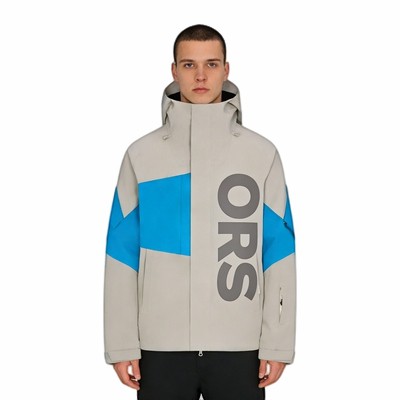
First, let’s clarify what insulation actually does in this context. Insulation’s whole job is to trap your body heat and stop cold air from sucking it away. But fishing’s a weird sport—you’re not just sitting still. You might be standing in a damp stream at 5 a.m. (your socks are already soaked), reeling hard for 10 minutes, then waiting half an hour for a bite. Your body temp fluctuates. So fishing jacket insulation isn’t one-size-fits-all. A lot of new customers mix up “winter down jacket” with “fishing shell”—big mistake. Let’s get specific.
Most casual or warm-weather fishing jackets—like the ones you grab for bass fishing in July—don’t have traditional insulation at all. These are shell jackets, plain and simple. Their job is to block wind and light rain, not keep you warm. Think of them as a raincoat with reinforced elbows (good for leaning on boat rails) and a hood that doesn’t block your line of sight. I see people buy these and get confused when they say, “Wait, it’s 65 degrees and I’m cold in this?” Yeah, because you didn’t add layers underneath. That’s the thing with non-insulated fishing jackets—they’re a barrier, not a heater. They’re for when you’re active, or when you just need to keep the drizzle off your base layer.
Now, when do you need insulation? If you’re fishing in temps below 50°F, or standing in water that’s 40-50°F (even if it’s sunny), or out at dawn/dusk when the wind’s sharp, you’ll want a jacket with actual insulating material. But not the same as a ski jacket, trust me. Ski insulation is thick and bulky because you’re mostly standing still on a slope. Fishing? You move, bend, lean, maybe even crouch. Bulk = bad when you’re fighting a 20-pound musky and can’t reach your rod. So fishing jacket insulation is usually lightweight, compressed, and designed to not bunch up.
What kinds of insulation do we use (since I run this supply side)? Two main types, plus some newer synthetic blends. First, synthetic insulation—think PrimaLoft, or our go-to brand, a mid-weight poly-blend we’ve tested for years. Synthetic is perfect for fishing because it works even when it’s wet. Down insulation gets clumpy when it’s damp, and loses 90% of its warmth—useless if you’re getting splashed or standing in dew. I’ve had customers tell me they brought a $300 down jacket ice fishing, spent 2 hours in snowmelt, and complained they were freezing. Synthetic doesn’t do that. That’s a non-negotiable for us—we only use down in fishing jackets if it’s a hydrophobic down, treated to repel water, and even then, we recommend it only for super dry cold days.
The second type is loose fill insulation, but only in specific areas. Wait, that’s a big trick a lot of suppliers use. They don’t fill the whole jacket—just the core: chest, back, upper arms. The sleeves and side panels? No insulation—they’re soft shell fabric, so you can move your arms freely when casting, and they breathe. That’s genius. If you insulate your whole jacket, your underarms and back get sweaty as soon as you start moving, and then the moisture makes you cold anyway. Smart fishing jacket insulation is targeted, not full-coverage. I’ve seen guys test our core-insulated jackets vs. full-puffy ones on a cold morning—they all said the full-puffy made them overheat mid-cast, while the core-insulated kept their chest warm without turning into a swamp.
Let’s get into the science of it, but keep it real. Insulation works by creating tiny air pockets—trapped air is the best insulator, right? So synthetic insulation for fishing is engineered to have those tiny, consistent air bubbles, even when it’s compressed from movement. When you bend to tie a hook, or lean over a boat gunwale, the insulation doesn’t flatten out completely. That’s the difference between a random puffy jacket and one made for fishing. We test every batch by having our team wear them on cold days, bend, reach, crouch—if the insulation shifts or gets flat, we send it back. No exceptions.
Another thing: breathability. Insulation traps heat, but if it traps sweat too, that’s a problem. Good fishing jacket insulation has “moisture-wicking” threads woven into it, or the outer shell is a waterproof-breathable fabric like Gore-Tex. So when you’re active, the sweat gets out, but cold air and water stay out. I had a customer last year who bought a cheap insulated jacket from a big box store, went walleye fishing in Minnesota, and came back saying he was dripping sweat and then freezing after the sun went down. The insulation in that jacket was just cheap poly fill, no breathability. We fixed him up with our mid-weight insulated jacket, and he texted me later saying he fished 6 hours and never got cold or sweaty. That’s the sweet spot.
Wait, also—what about “thermal lining”? A lot of people mix thermal lining with insulation. Thermal lining is like a thin fleece, sometimes with a little insulation, but it’s not the same as full fill insulation. It’s more for mild cold, like 50-60°F. It adds a little warmth, but it’s not going to cut it if you’re in 35°F weather with a north wind. We call these “warm shells” in our supply line—they’re good for in-between temps, but not for deep cold. I always tell customers to think about their activity level, not just the temp chart. If you’re going to be wade fishing for 4 hours, moving nonstop, you’ll need a thinner insulated jacket, not a thick one. If you’re ice fishing and mostly sitting in a hut, thick is fine.
Common myths I hear all the time: “All fishing jackets are insulated.” No way—half the ones we supply are non-insulated for warm-weather fishing. “Insulated fishing jackets are too heavy.” Our lightest insulated jacket is 12 ounces—lighter than a can of soda. You barely notice it. “Insulation makes the jacket waterproof.” Nah, insulation is separate. The shell is the waterproof part, insulation is the warm part. You have to have both, but they do different jobs.
As someone in the supply business, I see what works and what doesn’t. The best fishing jackets with insulation aren’t the bulkiest, they’re the ones that balance warmth, mobility, and breathability. They have targeted core insulation, synthetic or hydrophobic down, and a waterproof-breathable shell. They don’t make you choose between staying warm and being able to cast, or staying dry and not sweating through your shirt. That’s why we’ve tweaked our designs over the last 8 years—talk to any of our clients who’ve been with us, and they’ll tell you we stopped making full-insulation jackets years ago because no one wanted them.
If you’re shopping for one, here’s my quick guide: Check the product details. If it says “insulated,” look for what kind (synthetic vs down) and where the insulation is (core only is best). If you’re fishing in temps above 55°F, skip the insulated one—grab a shell jacket with a fleece liner you can take off if you warm up. If you’re below 50°F, go for mid-weight core-insulated. If it’s below 40°F, add a base layer and maybe a neck gaiter, but the jacket will do its job.
At the end of the day, the question “Do fishing jackets have insulation?” shouldn’t be a yes/no—it’s a “which type, and for what use.” If you’re picking the right one, yes, it’ll keep you warm when you need it, without turning you into a stiff, sweaty mess. If you pick the wrong one, it’ll either be too thin and cold, too thick and bulky, or get ruined the first time you get splashed.

If you’re a shop owner, guide service, or bulk buyer looking to stock or order high-quality fishing jackets that actually do what they’re supposed to—insulated or not—hit us up. We can walk you through our test batches, send samples, and figure out what works for your customers’ needs. No pressure, no salesy garbage, just straight talk about fishing gear that doesn’t suck.
Ski Jacket References
- Outdoor Industry Association. (2022). Technical Insulation Performance in Active Cold-Weather Apparel.
- PrimaLoft Inc. (2021). Synthetic Insulation for Outdoor Active Use: Water Resistance and Mobility.
- American Fisheries Society. (2020). Cold-Weather Fishing Apparel Guidelines for Anglers.
- Gore-Tex Corporation. (2023). Waterproof-Breathable Fabrics: Balancing Insulation and Ventilation in Outerwear.
Onroad Sportswear Co., Ltd.
We’re well-known as one of the leading fishing jacket manufacturers in China, featured by quality products and good service. Please feel free to buy customized fishing jacket made in China here from our factory. Also, samples are available.
Address: No. 501, A Block, Longtian Industry Area, Shilong, Dongguan, Guangdong, PRC. China
E-mail: Tracy.yi@onroad-sports.com
WebSite: https://www.orsoutdoor.com/
