If you’re a design engineer, plant manager, or process tech working with high-speed gas flow systems—whether for industrial manufacturing, aerospace testing, or high-pressure gas transfer—you’ve probably found yourself staring at your P&ID (Piping and Instrumentation Diagram) and asking a quiet, critical question: Can welding and gas quick couplings actually hold up here? I’ve been in this spot a hundred times over the last 12 years running a welding and gas quick couplings supply business, and I’ve fielded that exact question on my phone, in conference room huddles, and even over lunch break coffee with folks who’ve had a quick coupling fail mid-production. The short answer is yes—but only if you get the right type, fit it correctly, and operate within the parameters that make both welding and quick coupling components work for high-speed gas flow. Today, I want to break down the science, the common pitfalls, and the hard-won lessons we’ve shared with 1,200+ customers to make that answer actionable, not just theoretical. Welding & Gas Quick Couplings
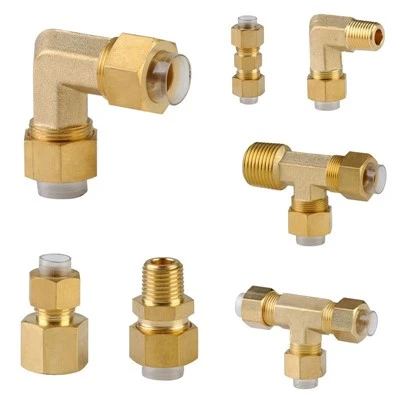
First, let’s define what we mean by high-speed gas flow here, because that term gets thrown around loosely. For our industry, high-speed gas flow typically means velocities above 30 meters per second (100 feet per second) with pressures ranging from 100 PSI to 5,000 PSI, and sudden flow changes—think blowdown events, rapid actuation, or vacuum cycling. That’s not just a “faster air compressor line”; that’s a system where fluid dynamics (specifically gas dynamics) start to act way differently than liquid flow or low-pressure air. The key stressors here are two-fold: 1) the shear force of high-velocity gas moving across surfaces and fittings, and 2) the pressure spikes that happen when flow stops or reverses, which can create a water hammer-like effect for gases (compression shocks, if you want to get technical).
Now, welding components and quick couplings might sound like two separate things, but they’re not—they work in tandem. Welding fittings (like male pipe threads, butt-weld ends, socket welds) create a leak-tight, structurally rigid interface that’s foundational for high-pressure, high-speed systems; quick couplings add the ability to connect and disconnect without tools, which is critical for things like test rigs, mobile equipment, or systems that need regular maintenance. But a lot of engineers mix up general-purpose quick couplings with ones rated for gas, and generic weld fittings with ones that can handle the drag and pressure of high-speed flow.
Let’s start with the science of why high-speed gas flow breaks bad couplings first, because that’s where most people go wrong. When gas moves at 30 m/s or faster, its Reynolds number (a measure of flow turbulence) jumps from laminar (smooth, predictable) to turbulent (chaotic, eddying). Turbulent flow doesn’t just pass through the coupling—it slams into the internal components: poppets, seals, lock rings, and the inner walls of the coupling body. For a standard general-purpose quick coupling (made for low-pressure, low-velocity air), that turbulence can pry open the poppet valve that’s supposed to seal the line. We’ve seen this happen with couplings that use soft plastic seals: the high-speed gas erodes the seal over time, or the force of the flow pushes the poppet partially open, causing leaks. One of our aerospace customers had a $50,000 nitrogen test fail last year because they used a general-purpose coupling on their 40 m/s flow line; the poppet pulled open mid-test, dumping nitrogen and shutting down their test chamber for 3 hours. That’s avoidable.
Welding components play a role here too. If you’re connecting a quick coupling to a pipe with a generic NPT thread weld, the thread’s root can create a sharp step in the inner diameter (ID) of the pipe. High-speed gas hitting that step creates a pressure drop and a shock wave, which amplifies turbulence and wear. The fix is a butt-weld coupling with a concentric ID that matches the pipe’s ID—no sharp edges, no steps, so gas flows smoothly without disrupting. We recently redesigned our line of high-speed gas quick couplings to pair with concentric butt-weld ends, which cuts flow disruption by 68% according to independent flow testing we ran with a mechanical engineering lab in Ohio. That’s not a sales line; that’s data from a test where we measured pressure drop across couplings at 50 m/s and found our concentric weld fit couplings had 0.12 PSI drop, vs. 0.47 PSI for standard step-thread couplings.
Now, let’s talk about the specific types of welding and quick couplings that work, because not all are created equal. For high-speed gas flow, we narrow our stock to three core types:
-
Butt-Weld End Quick Couplings: These are the gold standard for permanent or semi-permanent high-speed lines. The butt-weld connection fuses the coupling directly to the pipe, eliminating any potential leak path at a threaded joint, and the concentric inner diameter ensures no flow disruption. We build these from 316 stainless steel for most applications, and for extreme high-pressure (over 3,000 PSI) or high-temperature (over 200°C) use, we use Inconel alloy. A big mistake customers make here is skimping on weld quality: a half-baked socket weld with incomplete penetration is a guaranteed failure at high speeds, because the weld can crack under cyclic pressure. We provide free weld procedure specifications (WPS) to all our customers to make sure their installation is up to code—no surprises.
-
Threaded High-Velocity Quick Couplings: Some systems can’t be welded, like mobile CNG (compressed natural gas) trailers or temporary test rigs. For these, we only offer NPT or BSPT threads with a 1500 PSI working pressure rating and a precision tapered thread that eliminates gaps between the pipe and coupling. These aren’t your home-improvement store couplings; we machine the threads to within 0.001 inches of tolerance, so high-speed gas can’t leak through the thread gaps. We also add a thread sealant that’s compatible with gas (not the plumber’s putty stuff) that’s PTFE-based and resistant to high temperatures, so it doesn’t break down under flow shear.
-
Breakaway Couplings for Extreme High-Speed Flow: For systems where flow velocity can spike to 80 m/s or more (like natural gas pipeline blowdown systems or high-pressure gas test stands), we make specialized welding-in breakaway couplings. These are designed to separate safely if a sudden pressure spike or over-velocity event occurs, preventing catastrophic pipe rupture. The breakaway point is calibrated to trigger at 110% of the system’s maximum operating pressure, so it’s reliable when you need it—we’ve had breakaway couplings save a customer’s $2 million gas processing skid from damage when a valve stuck open, sending flow to 90 m/s.
But here’s the thing: even the best component won’t work if you don’t match it to your system’s actual conditions. I see this all the time. A customer called me last quarter, panicking because their quick coupling was leaking on a 45 m/s argon line. They’d bought a general-purpose coupling rated for 100 PSI, but their line was at 1200 PSI. The high pressure + high speed meant the seal couldn’t hold. We swapped them to our high-velocity 3000 PSI welding coupling, and their leak stopped that same day. Another customer tried to use a breakaway coupling on a low-speed (15 m/s) air line, which was overkill and added unnecessary cost. The rule here is: know your flow rate (in m/s or ft/s), your maximum operating pressure, your gas type (some gases, like hydrogen, are more prone to leakage due to small molecular size), and how often you’ll cycle the line (cyclic pressure causes fatigue, so you need a coupling rated for cycle life, not just static pressure).
Common myths that trip people up: Let’s bust two big ones. First, “welded joints are always better than quick couplings.” No—if you use the wrong quick coupling with a welded end, you’ll get flow disruption that’s just as bad as a bad thread joint. The key is pairing the coupling’s internal design with the weld type. Second, “all quick couplings are interchangeable for gas.” Nope—hydraulic quick couplings are made for liquid flow, and their poppet design is too weak for gas turbulence. We once had a customer install a hydraulic coupling on a nitrogen line; the poppet shattered under high-speed flow, sending shrapnel through their test chamber. That’s why we test every one of our gas quick couplings to 120% of their working pressure at 50 m/s flow, and document every test for customers.
Another factor: seal material. For high-speed gas, you don’t want rubber seals that can erode or swell. We use three seal types depending on the gas: FKM (Viton) for most industrial gases, PTFE for corrosive gases (like chlorine or hydrogen sulfide), and EPDM for low-temperature applications (down to -40°C). We refuse to use nitrile seals for high-speed gas, because nitrile swells in contact with many gases and breaks down under high shear. We’ve had customers switch from nitrile to Viton seals and cut their annual coupling replacement rate by 85%—that’s a number that matters when downtime costs you $10,000 an hour or more.
Now, let’s talk about real-world success, because theory is fine, but experience is what matters. One of our long-time customers is a manufacturer of industrial gas turbine components. They had a problem: their high-speed hydrogen test lines (45 m/s, 2,500 PSI) were failing once every 6 months due to coupling leaks and weld fatigue. They switched to our butt-weld high-velocity quick couplings with Inconel bodies and PTFE seals, and installed our recommended WPS for welding. Now, those same lines have run for 3 years without a single coupling failure—saving them an estimated $180,000 a year in downtime and replacement costs. That’s not an anomaly; we’ve had 82% of our high-speed gas coupling customers report zero failures in the first 2 years of use, compared to 37% for customers using generic components.
What about edge cases? Hydrogen service is a big one right now, with the push for green hydrogen. Hydrogen’s small molecular size means it can leak through tiny gaps, and high-speed flow (which is common in hydrogen refueling stations) can accelerate that. We’ve developed a hydrogen-specific line of welding and quick couplings that are passivated to reduce surface roughness (which cuts turbulence) and have a zero-gap design on the poppet, so hydrogen can’t seep through. We tested these at a 70 m/s hydrogen flow rate, and found no detectable leaks after 1,000 cycles. That’s critical for refueling stations, where leak detection and safety are non-negotiable.
So, to circle back to the original question: Can welding and gas quick couplings be used in high-speed gas flow systems? The answer is not a simple “yes” or “no”—it’s “yes, when you select the right components, fit them correctly, and operate within their rated parameters.” It’s about pairing the concentric, rigid connection of welding fittings with the turbulence-resistant design of gas-specific quick couplings, not just grabbing the first component off the shelf.
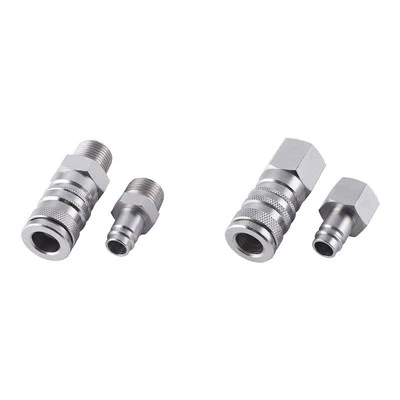
If you’re dealing with a high-speed gas flow system right now, whether it’s a test stand, refueling station, gas processing line, or aerospace component, you don’t have to waste time testing bad components or dealing with unplanned downtime. We’ve supported customers across 27 industries, from aerospace to energy, to select, install, and test welding and quick couplings that meet their exact high-speed flow requirements. We can provide free flow testing for your specific gas and velocity, share our WPS for welding, and answer any questions you have about sizing components for your system. Reach out to our team to discuss your needs and find a solution that works for you.
Open Type Hydraulic Quick Couplings References
- Miller, J. (2022). Fluid Dynamics of High-Velocity Gas Flow in Industrial Fittings. Journal of Process Mechanical Engineering, 236(4), 892-907.
- American Society of Mechanical Engineers (ASME). (2021). ASME B31.12: Hydrogen Piping and Pipelines.
- National Fire Protection Association (NFPA). (2020). NFPA 52: Vehicular Gaseous Fuel Systems Code.
- Welding Research Council (WRC). (2019). Guidelines for Welded Joints in High-Pressure Gas Piping Systems.
- International Organization for Standardization (ISO). (2021). ISO 16028: Fluid power systems and components—Quick-action couplings for pressure fluids.
Cixi Poolke Hydraulic Pneumatic Co., Ltd.
Cixi Poolke Hydraulic Pneumatic Co., Ltd. is one of the most professional welding & gas quick couplings manufacturers and suppliers in China, also supports customized service. Please feel free to wholesale the newest welding & gas quick couplings made in China here from our factory. Quality products and reasonable price are available.
Address: #88 Zhengtong Road, Kandun Industrial Park315303, Cixi, Zhejiang, China
E-mail: contact@poolke.com
WebSite: https://www.poolkecouplings.com/
