Hey there, if you’ve ever worked with coatings, inks, adhesives, or even some cleaning products, you’ve probably bumped into ester solvents—they’re the unsung heroes of the chemical world, right? As someone who’s been supplying ester solvents for over a decade, I can’t tell you how many times customers reach out panicking, asking “Can I mix this with that?” because they’re scared of ruining a batch, wasting money, or even dealing with a safety headache. Today, let’s break down the compatibility rules for mixing ester solvents with other solvents, no stuffy jargon, just real talk from someone who’s seen (and fixed) way too many mix-up mistakes. Ester Solvents
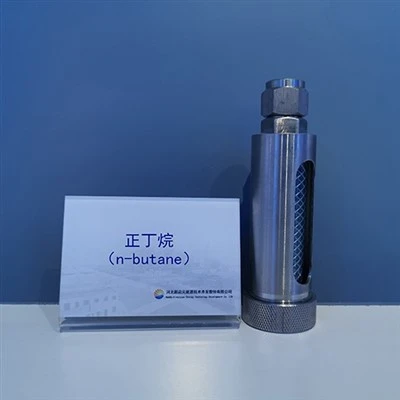
First off, let’s keep this basic: ester solvents get their name from their chemical structure—they have a carbonyl group double-bonded to an oxygen, hooked up to another oxygen (that’s the ester linkage). What makes them stand out is they’re polar but not as harsh as some other polar solvents, like alcohols or ketones, and they mix with both polar and non-polar stuff pretty well… but not always. That’s where the rules kick in. The biggest thing to remember here is solubility parameters, but let’s ditch the textbook definition: think of it as “how similar two solvents are in their ‘chemical personality’”. If their personalities are too different, they’ll separate, like oil and water. I’ve seen a customer mix our standard ethyl acetate ester with a straight mineral spirit (super non-polar) and it looked like a milkshake that curdled—total disaster, and they had to toss 50 gallons of product. Lesson number one: check those solubility numbers, or at least do a tiny “shake test” before dumping a whole tank.
Wait, but let’s get specific about common mixes people actually do, because generic rules don’t help anyone. First, ester solvents and other polar solvents—like alcohols (ethanol, isopropanol), ketones (acetone, MEK), and even glycol ethers. Here, esters are usually a great match because their polarity is in the same ballpark. I see this all the time in ink formulations: adding a bit of our butyl acetate ester to a mix of ethanol and MEK helps adjust evaporation rate without making the formula too smelly or too toxic. Wait, but there’s an exception here: never mix ester solvents with strong acids or strong bases. That’s a huge one I can’t stress enough. Esters undergo hydrolysis when exposed to acid or base—break down into alcohol and carboxylic acid. Last year, a manufacturing client tried to clean a tank with a mix of our ester solvent and a strong caustic (lye) to get rid of old adhesive residue. By the time they rinsed it, the tank was corroded, and the residual solvent had turned into vinegar-smelling gunk. Total equipment damage, and they had to shut down for a day for repairs. So rule two: no mixing esters with concentrated acids or bases, period.
Next, ester solvents and non-polar solvents—think mineral spirits, toluene, xylene, hexane. Like I mentioned earlier, solubility is the key here. Esters are more polar than these non-polar guys, so how well they mix depends on the exact ester and the non-polar solvent. For example, ethyl acetate (our most popular fast-drying ester) has a pretty balanced polarity, so it mixes pretty well with toluene or xylene, as long as you don’t go overboard. But if you take a super non-polar ester, like butyl stearate, and mix it with hexane, that’s a different story—they might mix at room temp, but cool things down, and they separate. Also, watch out for azeotropes when mixing esters with non-polar solvents? Wait, no—azeotropes are more when mixing polar solvents, but even here, mixing ratios matter. If your mix is 90% non-polar and 10% ester, they’ll probably stay mixed. Flip that to 50/50, and you might get phase separation. I always tell customers to start small: test a 10-20% ester in the non-polar solvent first, shake it, let it sit for an hour, check for cloudiness or layers. If it’s clear, you’re good. If not, adjust the ratio.
Then there’s the group of solvents called “amphoteric” ones—wait, no, better to call them solvents that can be both, like certain glycol ethers or even some esters themselves? No, let’s talk about mixtures with water. A lot of people ask: can I mix ester solvents with water? Short answer: some can, some can’t. Lower molecular weight esters, like methyl acetate or ethyl acetate, are miscible with water up to a point—ethyl acetate mixes with water in any ratio below ~8% water, right? Wait, no, actually ethyl acetate’s solubility in water is about 8 g per 100 mL at 20C. So if you add our ethyl acetate to water, you’ll get two layers until you hit that saturation point. Higher esters, like butyl acetate, barely mix with water at all, like less than 1 g per 100 mL. This matters a lot for water-based coatings or inks. I had a customer making water-based wood stain who tried to use our butyl acetate, not realizing it wouldn’t mix with the water phase, so their stain ended up streaky and uneven. Rule three for water mixes: match the ester’s water solubility to your formula’s water content, or use an emulsifier if you need them to stay mixed. Safety note here too: even if an ester mixes with water, don’t assume it’s non-flammable—most ester solvents are flammable, same as a lot of other common solvents, so always check flash points when mixing. Oh right, flash point compatibility! That’s another big one people overlook. If you mix a high-flammability ester (like ethyl acetate, flash point ~-4C) with a low-flammability solvent, like mineral spirits (flash point ~40C), you’re lowering the overall flash point of the mix, making it way more dangerous. I always send my customers a full SDS (Safety Data Sheet) for every ester we supply, and I tell them to add the flash points of the other solvents together by volume, roughly, to get the mix’s flash point. Never just assume “they’re both solvents, so it’s fine.”
Wait, what about specific use cases? Let’s cover the three biggest industries our customers are in, because that’s where mixing happens every day. First, paints and coatings: people mix esters with alkyd resins, acrylics, right? Ester solvents are great here because they evaporate at a moderate rate, so they help the paint level out without drying too fast or too slow. When mixing esters with paint solvents (like xylene, toluene, naphtha), the same rules apply: no strong acids/bases, check solubility, watch flash point. Second, inks—flexographic, gravure, all that. A lot of ink formulations use ester solvents to reduce VOCs (volatile organic compounds) compared to other solvents. Mixing esters with alcohol-based inks is usually fine, but again, no strong bases. I had a flexo printer last year who was mixing our isopropyl acetate ester with a lot of MEK to adjust drying time, and they called us because their ink wasn’t bonding to plastic. Turns out, they had too much ester, and the surface tension was off—adjusted the ratio, and it worked like a charm. Third, adhesives: solvent-based adhesives often use esters to control viscosity. Mixing esters with other adhesive solvents, like heptane or acetone, works, but watch out for phase separation if you use a long-chain ester. Also, if your adhesive is going to be used in a high-humidity environment, remember that some esters absorb moisture, which can weaken the adhesive bond—so that’s another compatibility check beyond just mixing with other solvents.
Wait, let’s get to common mistakes I see all the time, not just rules. Number one: not testing small-scale first. I can’t tell you how many times a customer has dumped 55 gallons of solvent mix, no test, and it’s ruined. Even if two solvents “should” mix, there might be trace impurities that cause issues—like a leftover acid from a previous batch in a container, or water contamination in a non-polar solvent. The shake test is free, takes two minutes, and saves you thousands. Number two: ignoring chemical reactivity, not just solubility. I already mentioned acids and bases, but also, esters can react with certain metals? No, mostly with strong reagents, but another one: don’t mix ester solvents with oxidizing agents, like hydrogen peroxide or bleach. That’s a safety risk, not just a product one—last year, a customer mixed our ester solvent with a hydrogen peroxide cleaning solution, and it fumed up, almost caused a fire. That’s not a compatibility rule to mess with. Number three: not accounting for evaporation rate when mixing. Even if two solvents mix perfectly, if one evaporates way faster than the other, your mix will change consistency mid-use. For example, mixing ethyl acetate (super fast evaporating) with butyl acetate (slow) is common, but if you mix ethyl acetate with hexane (even faster), your mix will dry in seconds before you can apply it, leading to defects.
So what’s the quick cheat sheet for beginners? Let’s make this simple, no jargon:
- No mixing esters with concentrated strong acids or bases (they break down and can be hazardous).
- Always do a small-scale shake test with your exact mix before full production—let it sit an hour, check for cloudiness, layers, or weird smells.
- When mixing with water, use lower ester chain lengths (methyl, ethyl acetate) for water compatibility, higher (butyl, isobutyl) for non-water mixes.
- Add flash points by volume when mixing—high-flammability esters will lower the mix’s overall flash point, so keep that in mind for safety.
- For paint, ink, adhesive formulas, test a tiny batch for performance (bonding, drying, appearance) not just miscibility.
Now, as your go-to ester solvent supplier, we don’t just sell you drums and leave you hanging. We have technical support folks on staff who can help you work through compatibility questions, get you the right SDS, even help with small-scale testing if you need it. Whether you’re a small business experimenting with new formulas or a large manufacturer scaling production, we get that mixing solvents is a big deal—one wrong move can cost you time, money, and even safety. If you have questions about specific mixes, need a custom blend, or just want to chat through a formula you’re working on, reach out to our team to connect and get the details you need. No hoops to jump through, just straight answers from people who know esters inside and out.
Glycol Ethers References:
- Solvent Compatibility Guide, American Chemical Society, 2022
- Safety Data Sheets for Ester Solvents, Global Industry Standards, 2023
- VOC Reduction in Coatings: Ester Solvent Applications, Journal of Industrial Chemistry, 2021
- Phase Behavior of Organic Solvent Mixtures, CRC Press, 2020
- Flammability Properties of Solvent Blends, National Fire Protection Association, 2022
Hebei Xinxinyuan Energy Co., Ltd.
Hebei Xinxinyuan Energy Co., Ltd. is one of the most professional ester solvents manufacturers and suppliers in China, featured by quality products and good price. Please rest assured to wholesale customized ester solvents made in China here from our factory.
Address: Zhongjie Industrial Park, Huanghua City, Cangzhou City, Hebei Province, China
E-mail: atl2066@qq.com
WebSite: https://www.xinxinyuanfr.com/
